
Caught Between Floods and Saltwater Intrusion, Coastal Countries Are Also on the Frontline
When discussing the water crisis in West Africa, people often think of drought and water stress affecting the Sahel. Yet the region’s coastal countries are far from spared. From rising sea levels to saltwater intrusion, coastal erosion, and flooding, these nations are facing growing water-related challenges that threaten their economic development, agriculture, and populations.
Accelerated Coastal Erosion and a Worrying Rise in Sea Levels
West African coastlines—home to major port infrastructures and large urban centers—are experiencing alarming erosion. According to the World Bank, more than 13,000 hectares of land are lost each year due to coastal erosion.
In Ghana and Côte d’Ivoire, some coastal areas are retreating by several meters per year, threatening fishing villages and urban infrastructure. Entire neighborhoods, such as Grand-Bassam in Côte d’Ivoire or Keta in Ghana, have been eaten away by the ocean, forcing authorities to relocate residents.
Senegal faces similar challenges: erosion threatens neighborhoods in Dakar such as Rufisque and the famous Mamelles beaches, essential to tourism. Construction along the coastline and sand extraction worsen the situation.
Saltwater Intrusion: A Silent Threat to Agriculture and Drinking Water
Beyond land loss, coastal communities must contend with saltwater intrusion—a phenomenon that renders groundwater and agricultural lands unusable. In the Senegal River Valley, once fertile areas are increasingly affected by salinity. In Benin and Togo, agricultural zones near the Mono River face the same issue. In Nigeria, the Niger and Cross River deltas see their aquifers contaminated by seawater, forcing farmers to abandon their land.
In coastal cities, drinking water is becoming scarcer. In Abidjan, freshwater boreholes are affected by salinization, complicating water supply efforts.
Increasingly Frequent Floods
Urban flooding is another major challenge. Rising sea levels and extreme rainfall, amplified by climate change, regularly overwhelm major cities.
Lagos (Nigeria), a megacity of over 20 million inhabitants, suffers spectacular annual floods that paralyze infrastructure and displace thousands of people.
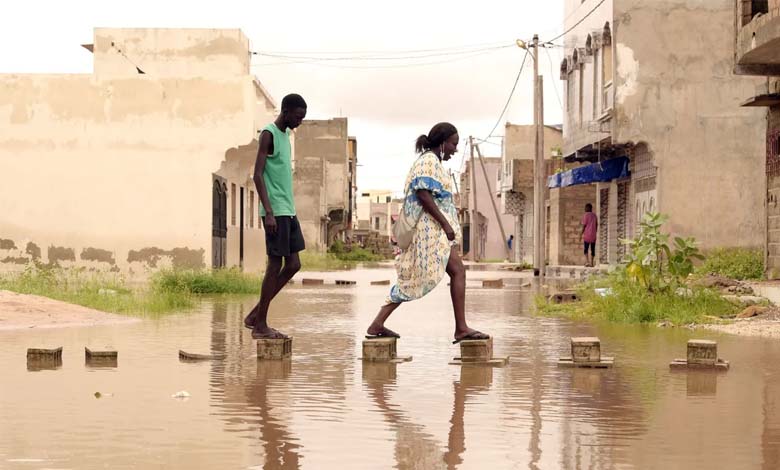
Dakar (Senegal) experiences flooded neighborhoods every rainy season, with drainage systems often unable to cope.
Abidjan (Côte d’Ivoire) is regularly hit by torrential rains that cause collapses and landslides.
According to the World Meteorological Organization (WMO), 40% of West African coastal regions will face critical water vulnerability by 2050.
Initiatives to Strengthen Resilience
In response to these challenges, several regional programs and local initiatives have been launched:
- The WACA (West Africa Coastal Areas Management Program), funded by the World Bank, supports coastal countries in combating erosion and protecting infrastructure.
- Ghana is building sea defense structures such as dikes and breakwaters to slow the ocean’s advance.
- Senegal is investing in sanitation and urban drainage to reduce flooding.
- The introduction of adapted agricultural techniques, such as salt-resistant crops, helps limit agricultural losses.
An Urgent Crisis That Can No Longer Wait
Contrary to widespread belief, West Africa’s coastal countries are not shielded from water-related tensions. Rising seas, saltwater intrusion, and urban flooding threaten millions of people and demand ambitious policies for water management and coastal protection.
To face these challenges, stronger regional cooperation and sustained investment are essential to safeguard these strategic territories. In a world where water is becoming an increasingly contested resource, Africa’s coastal regions must also prepare for the challenges ahead.