2025 review: the technical innovations that truly reshaped hydropower, energy and mining.
In 2025, the most visible innovation was not the “gadget”, but the industrialisation of solutions that make critical systems more controllable, more storable and safer. Three trends stood out: long-duration storage through hydropower, the race towards more robust batteries, and the shift of mines towards autonomy and electrification. POINT FOCUS looks back at these trends, which gathered momentum over the year and are already reshaping industrial balances.
Hydropower: the comeback of “water batteries”
The major technical development of the year in hydropower was the strong return of pumped-storage hydropower as a central flexibility solution. The International Energy Agency notes that pumped storage still accounts for more than 90% of global electricity storage capacity. At the same time, the International Hydropower Association points out that the global pipeline of hydropower projects exceeds 1,075 GW, including 600 GW of pumped storage. On the ground, innovation is visible in hybrid “renewables + hydro storage” projects. A flagship example at the end of 2025 is Pinnapuram (India), which combines 4,000 MW of solar, 1,000 MW of wind and 1,680 MW of pumped storage to deliver more “firm” power to the grid.
Energy: safer batteries, better-controlled fusion
In electrochemical storage, 2025 was marked by growing momentum around sodium-ion technology, particularly from a safety and cost perspective. Research reported in early December described an “all-solid-state” sodium-ion battery designed to replace flammable liquid electrolytes, with expected gains in stability and reduced risk of thermal runaway. In energy research and development, the year’s most striking technical milestone came from the WEST tokamak (CEA, Cadarache): on 12 February 2025, it maintained a plasma for more than 22 minutes (1,337 seconds), a duration record for a tokamak according to the CEA (French Alternative Energies and Atomic Energy Commission). This is not yet electricity fed into the grid, but it represents a significant advance in plasma control—and therefore in long-term industrial credibility.
Mining: autonomy moves beyond pilots, electrification takes shape
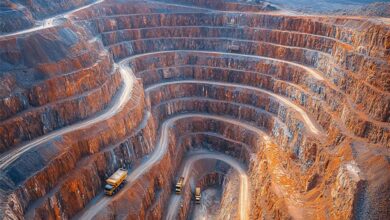
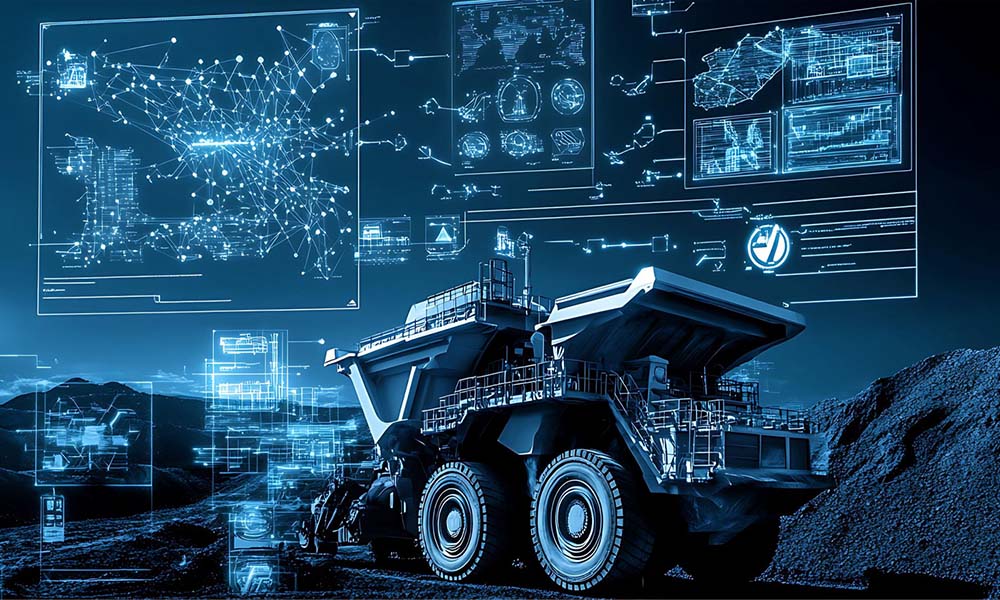
In the mining industry, 2025 confirmed a turning point: innovation is moving from demonstration to operation. Mining Weekly reports that at the Hulunbuir mine (China), 100 fully autonomous trucks are already operating daily, supported by integrated charging systems and intelligent control platforms. At the same time, the electrification of heavy fleets is becoming a genuine engineering pathway rather than a slogan. The report The Electric Mine 2025 (Komatsu) highlights progress in batteries (costs, energy density, charging times) and the growing role of fuel cells—particularly hydrogen—where batteries reach their practical limits.
What did 2025 really change?
What these innovations have in common is straightforward: they narrow the gap between political ambition and industrial reality. Large-scale storage through hydropower, safer and more diversified battery chemistries, longer plasma stabilisation, automated and electrified mines—all converge towards a single objective: keeping critical systems running 24/7 with fewer risks, fewer stoppages and better control over the value chain. Beyond records and demonstrators, a shared logic is emerging: securing flows, strengthening infrastructure resilience and reducing dependencies. In 2026, the challenge will therefore be less about innovating than about deploying at scale, at the right cost, in sometimes unstable environments.