Fuel crisis: the mining sector is not spared.
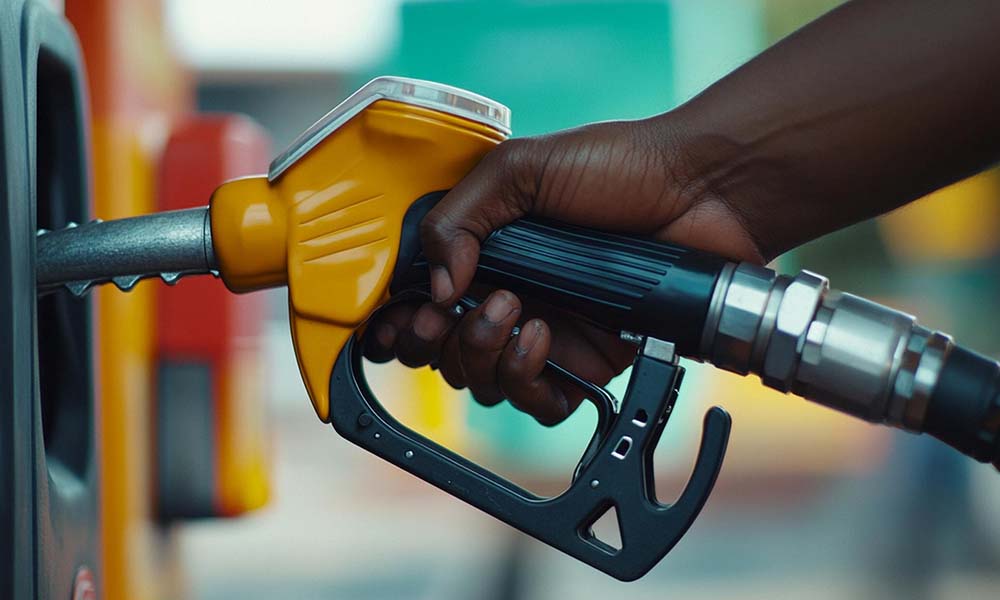
The fuel crisis that has been hitting Mali for several weeks has not only disrupted the daily lives of households. It has also struck the national economic fabric head-on, disrupting supply chains, slowing productive activities and placing entire sectors under strain. Among them, the mining industry stands out as one of the first silent victims of an unprecedented economic blockade, the effects of which go far beyond the issue of urban mobility alone.
The terrorist threat weighing on Mali and the Sahelian countries has entered a new phase with a change in the modus operandi of armed groups. For several months now, these groups have been targeting economic interests in southern and western Mali. These regions, known as prime mining districts, experienced for the first time last June in Naréna direct attacks against companies operating in the mining sector. Three months later, the situation became more acute with attempts to choke off fuel supplies to the capital, Bamako, and by extension to the entire country. The mining industry found itself exposed to a major logistical constraint, in a context where the continuity of energy flows directly conditions production.
Fuel: the lifeblood of mining operations
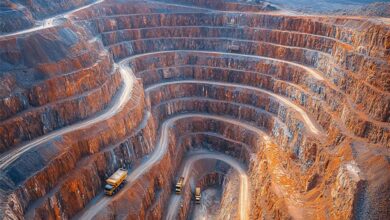
Mali derives the bulk of its export revenues (76%) and a significant share of its GDP from industrial mining (nearly 10%), most of which is located in the regions of Sikasso and Bougouni in the south and Kayes in the west. Mining concessions are highly energy-intensive operations which, given the limited capacity of the national power distribution network, have invested in backup solutions, notably very large-capacity generators.
Beyond electricity generation, mobile equipment—excavators, ore haulage trucks—as well as crushing units and processing plants all depend on a constant flow of fuel. Any disruption to this flow, whatever the cause, constitutes a critical logistical shock that can jeopardise the very viability of operations.
The worst-case scenario: preserving operational continuity
While queues lengthened outside filling stations in the Malian capital, other stakes were playing out away from public view. Between mining company headquarters and operational sites, tension was palpable. Several executives confirm that an “extreme business continuity mode” was activated to avoid a complete shutdown of operations.
An internal rationing system was put in place, while the true scale of the crisis was assessed and possible alternatives explored. Operations directors and logistics managers feared a gradual but relentless scenario: the stoppage of earthmoving equipment, a slowdown in crushing activities, followed by the shutdown of the processing plant. “It’s a technical descent into hell,” one of them confided.
Naturally, in such circumstances, operators turned to the authorities. Several companies indicate that they formally notified their supervisory bodies to signal the pressure that fuel shortages were placing on the continuation of operations. This step served a dual purpose: seeking state support and complying with the provisions of the Mining Code, which require the declaration of any constraint likely to justify a reduction in output or a temporary suspension of activities.
Supplying at all costs?
In response to the crisis, the Malian state provided an initial level of support by organising secured fuel convoys to Bamako. However, the military escort of these convoys profoundly altered usual supply circuits, preventing mining operators from being supplied directly by their hydrocarbon subcontractors. The stated priority was to ease tensions in the capital, limiting any diversion without prior authorisation.
Mining companies then sought to deploy unprecedented, complex and costly strategies. The use of military-secured convoys was considered as a transitional solution, although slower to implement and exposing armed forces to greater risk. Air transport was also discussed—not for fuel itself, but for critical products and spare parts—an option that is prohibitively expensive and unsuitable for the volumes of hydrocarbons required by mining operations.
According to our information, a large industrial mine consumes between 50 and 140 million litres of fuel per year. Depending on the design and size of infrastructure, daily requirements can range from 150,000 to 850,000 litres. Some companies sought to diversify their supply sources, multiplying suppliers or exploring new routes—longer and just as risky. These adjustments increased logistical costs and led to strict optimisation of fuel use: limiting non-essential travel, shutting down diesel generators during the day when the national grid was available, and prioritising high value-added activities. As for the human and social impact of these measures, sector specialists note that reduced mobility affects staff rotations, catering supplies and, more broadly, relations with local communities.
Rethinking energy sustainability beyond the crisis
According to our information, all major industrial mines managed to maintain operations, with the notable exception of the Tabakoto mine (Kéniéba) and, to a lesser extent, Bagrama Mining (Koulikoro) and the new Bougouni lithium mine. It should be recalled that these sites were already facing structural difficulties, whether related to the supply of industrial explosives used in drilling and rock fragmentation operations, or internal social tensions exacerbated by the fuel crisis.
This crisis acts as a stark revealer of the vulnerabilities of Mali’s mining model. It highlights an extreme dependence on fragile land-based logistics in an unstable security environment. It also raises questions about the medium-term energy sustainability of the sector. Behind the scenes, national operators such as Afrilight are calling for an acceleration of renewable energy projects, particularly solar, to power sites and reduce dependence on diesel—structural solutions that do not, however, address the immediate emergency.
Each day of supply tension weighs not only on gold production—already forecast by Reuters to decline in 2025—but also on investor confidence in the country’s ability to secure its strategic industries. As we go to press, the situation appears to be easing, despite the persistence of pockets of security threats to which the military authorities say they are providing an appropriate response.