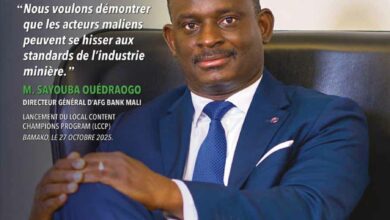
AFG Bank Mali launches its Local Content Champion Program.
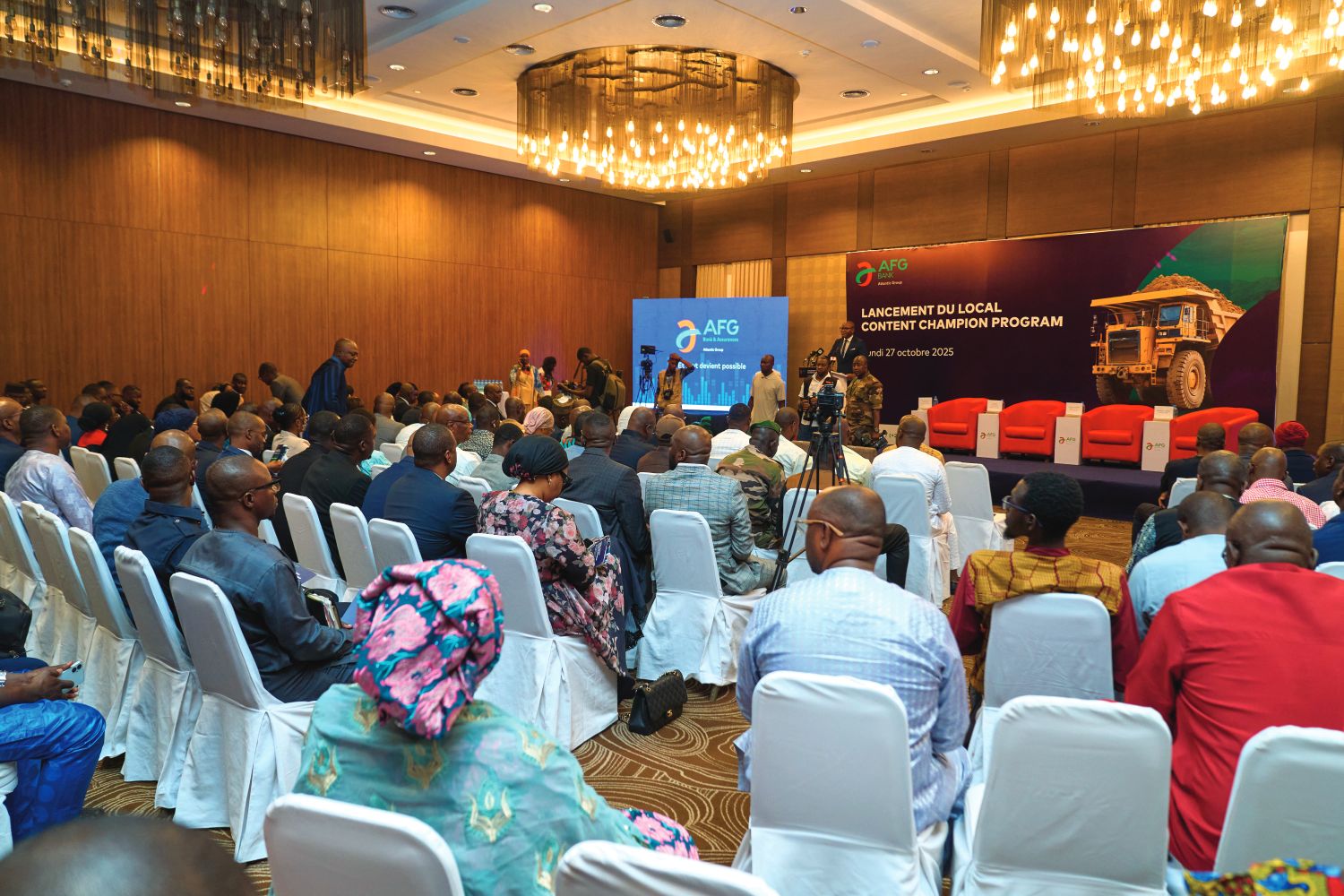
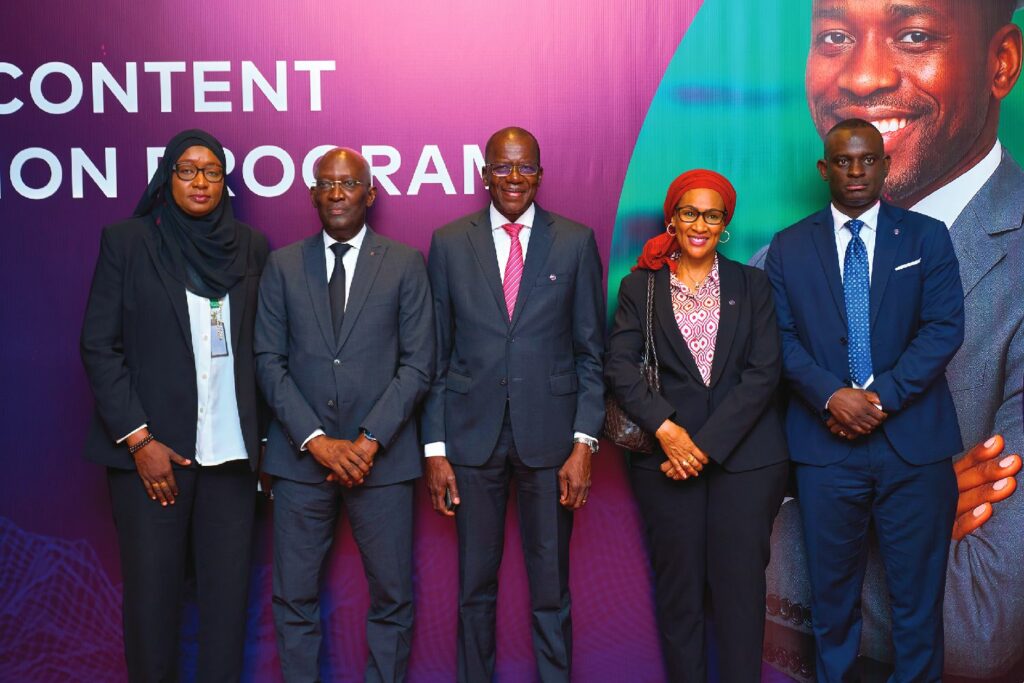
Announced several months ago, the highly anticipated Local Content Champion Program (LCCP) was officially unveiled on 27 October. AFG Bank Mali brought together public authorities, partners, sector stakeholders and observers to launch its implementation. The ceremony was particularly closely followed by mining-sector players—especially national subcontractors and suppliers—who turned out in force, reflecting the growing interest in local content.
An AFG Bank Mali organising team—focused yet visibly tense—was already at work in the 300-seat conference room of the Radisson Collection hotel an hour before the ceremony began. The fuel crisis in Bamako had curtailed mobility, making every event a gamble on attendance. Gradually, however, guests began to arrive, conversations picked up, the room filled and the tension eased.
At precisely nine o’clock, the officials were announced. Unsurprisingly, AFG Bank Mali drew a full house. The Ministers responsible for Mines and Energy, flanked by the bank’s executives, took their seats as journalist Seyni Amar, master of ceremonies for the day, opened proceedings.
One room, one audience, one shared interest
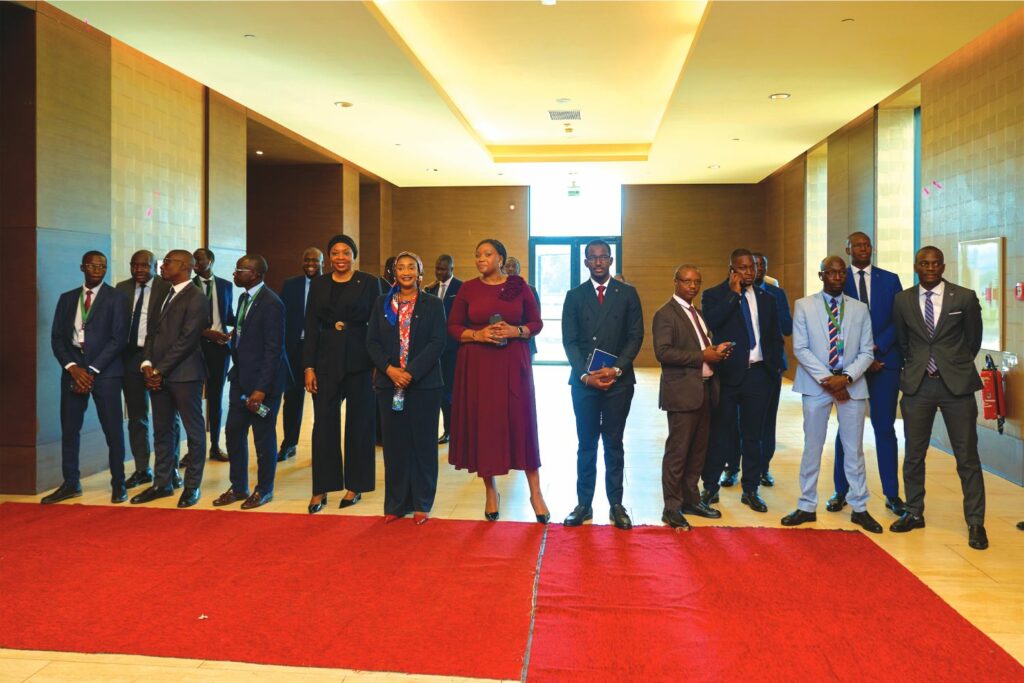
An oil-sector operator cracked a joke: “When a bank invites you, it’s better to accept the invitation.” The atmosphere was relaxed, yet the audience was fully aware of the stakes. Like him, participants from a wide range of backgrounds were present: the Vice-President of the National Employers’ Council; the Director of the Subcontracting and Partnership Exchange; the presidents of associations representing mining suppliers, service providers and subcontractors; heads of legal and local-content advisory firms; representatives of mining companies, the mining administration and artisanal miners’ cooperatives. For nearly three hours, they followed with close attention not only the opening speeches but, above all, the panel discussion entitled “Financing and local competitiveness: building local content champions”.
Among the audience, observers noted the discreet but significant presence of the newly appointed Permanent Secretary for Local Content, Mr Alou Koïta. The Minister of Mines referred to this appointment in his address, welcoming it as a further step towards operationalising the institutional framework. Enacted in August 2023 and supported by an implementing decree since 9 July 2024, the Local Content Law has now entered an active phase of implementation. More than a year after coming into force, sector stakeholders are closely tracking its rollout, fully aware of what is at stake in terms of better integrating mining into the national economy. The consultation framework to be established at the Presidency of the Republic, together with the Permanent Secretariat once operational, is expected to define a clear line of action for mining companies.
The challenges of local content
Throughout the launch ceremony, speakers consistently stressed one central point: financing for national companies remains the primary challenge today. Beneath this, other structural issues also emerged—challenges that all agreed must be addressed through complementary approaches. Beyond financing, the priorities include better structuring of national companies, scaling up human capital, and a stronger emphasis on rigour and professionalism.
Professor Amadou Keïta, Minister of Mines, underlined that the State recognises the private sector’s decisive role in developing the mining industry. He nevertheless recalled that “it is up to the private sector to assume risks and to provide the financial, material and human resources necessary for the development of the mining industry, within a framework of simple, clear and transparent rules laid down by the State”.
The ceremony was also marked by a major announcement: an initial allocation of CFA 100 billion to the Local Content Champion Program (LCCP). Through this initiative, AFG Bank Mali aims to translate the Minister’s call into concrete action by supporting the structuring and scaling-up of national mining-sector companies. The bank plans to put in place a robust governance mechanism to identify, support and showcase high-potential local firms, with the objective of nurturing around thirty champions.
In the longer term, nearly 150 companies are expected to benefit from the programme—through privileged access to finance as well as targeted training, management support and strategic advisory services—to sustainably strengthen their capabilities and competitiveness. Conceived as a cross-cutting response to the structural challenges identified within the mining ecosystem, the LCCP is presented by its initiators as a suite of reliable solutions tailored to national small and medium-sized enterprises. Today, fewer than 15% of these firms have access to conventional bank credit and only 22% produce certified financial statements. The LCCP specifically aims to build capacity, enhance competitiveness and facilitate integration into local value chains. The financing levers offered go well beyond traditional credit lines, including innovative mechanisms such as leasing, factoring, guarantees and venture-capital solutions adapted to the realities of local SMEs.
Debates to better understand the LCCP
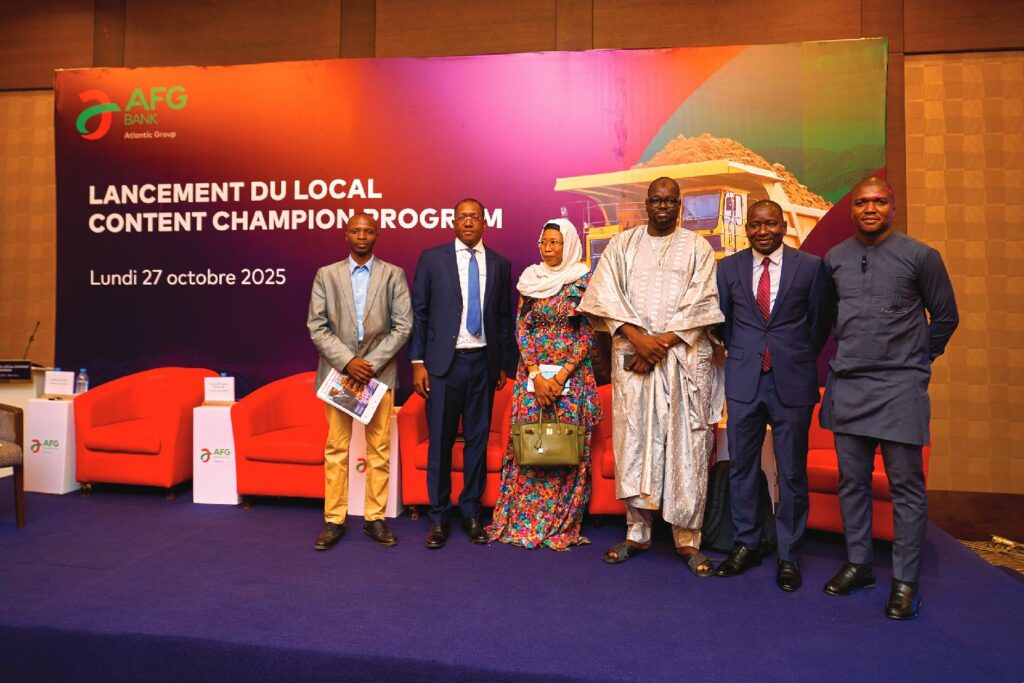
The panel discussion—“Financing and local competitiveness: building local content champions”—the true second highlight of the event, was moderated by Mr Seydou Coulibaly, Deputy Chief Executive Officer (Operations) of AFG Bank Mali. It brought together several prominent sector figures: Ms Wadiou Traoré, President of Women in Mining (WIM) and Director of Zenith Mining Group; Mr Hamadoun Maïga of Pyramis Consulting; and Mr Cheikh Amadou Tidiane Ba, Country Director of Somisy (Resolute Mining Group).
Focusing on financing and the competitiveness of local companies, the panel clarified how the Local Content Champion Program operates and detailed the scope of its integrated approach, structured around three complementary pillars. These include drilling and exploration; engineering and study services; general services (security, cleaning, catering); transport and logistics; hydrocarbon supply; equipment maintenance; and the supply of civil explosives.
Several participants sought clarification on the programme’s duration and the timeline for achieving its objectives. AFG Bank Mali indicated that the initial phase will run for three years, with the ambition of creating 2,000 direct jobs and structuring 150 local companies, around thirty of which are expected to emerge as genuine national champions. Beyond the figures, the panel underscored the robustness of a framework widely perceived as comprehensive, pragmatic and already underpinned by a clear implementation methodology.