Indaba 2026: the call for union
Under the theme “Stronger Together: Progress Through Partnerships”, this year’s edition of the continent’s most influential mining forum delivered a clear message: African mining cannot be dissociated from major geopolitical issues.
The event claims on its website a record attendance and “the highest turnout in its 32-year history”. The threshold of 15,000 participants (delegates, mining company executives and investors) has been largely reached, reflecting the forum’s weight in the global configuration of extractive industries in Africa. Coming from all horizons, both geographical and professional, sector players and those from related sectors made Cape Town the African capital of dialogue around mining.
The “Investing in African Mining Indaba”, or simply Indaba for regulars, is a space dedicated to promoting sustainable investment, strengthening collaboration and positioning African mining as an engine of economic growth and long-term prosperity.
● From the era of speeches to that of actions.
This orientation appears from the very first interventions of the event with the South African Minister of Mineral Resources, Gwede Mantashe, the Minister of Mines of the Democratic Republic of Congo, Louis Watum Kabamba, and above all the Zambian president, Hakainde Hichilema. In Cape Town, the latter delivered a programmatic speech on what African mining should be, but also on what his country defends as a vision of partnership around this industry.
The speeches delivered have a bittersweet flavor, as certain postures seemed to go against the stated logic. Africa, at Indaba, wants to be sovereign over its wealth, claiming autonomy and independence over the entire mining value chain. But this same Africa affirms, at the same time, its openness to strategic partnership, extolling the merits of a model long criticized by populations. Indeed, whether it is the South African minister, the Zambian president or the Secretary General of the Ministry of Mines of Mali, the postures were those of strong countries seeking total control over the entire mining operation chain. These countries highlighted major reforms to rebalance the partnership established with international investors. And therein lies the problem. Is a sovereign Africa without real capacity to finance the development of its mining industry a chimera?
● But union can wait…
The thematic sessions of Indaba 2026 long debated common projects in Africa for better resource valorization on the continent. The pious wishes of an Africa united around a common goal were reiterated, but very quickly, one realizes that at this forum, it is primarily a positioning war in a large investors’ market. Delegates from each country, including at the level of the very recent AES confederation, first vie to sell their country’s mining potential. Union can still wait.
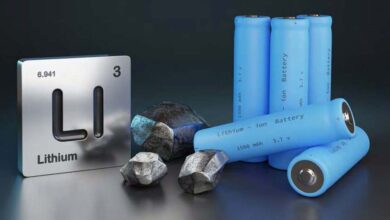
This logic of competitive positioning was also reflected in the hierarchy of minerals highlighted by the different delegations. Copper was the star mineral, slightly ahead of lithium. Zambia, which aims to produce three million tons of copper per year, quickly highlighted the miracle recipes it offers investors around this mineral presented as the backbone of global electrification and energy transition.
On the Malian side, the emphasis was notably placed on the recent feat of bringing two lithium mines into service. “Today, Mali is taking a new direction, that of diversification with lithium production,” declared the Secretary General of the Ministry of Mines, Soussourou Dembélé. Driven by the promise of combined production that will allow the country to position itself as the leading exporter of spodumene concentrate in Africa and the fifth in the world, the authorities invited investors to trust the new regulations in force since 2023.
● Is Mali back?
The 2026 edition had a rather special flavor on the Malian side. The strong mobilization of private sector actors, some estimating more than 200 delegates, as well as state entities, had an air of revenge after two years of absence for a country that had been a regular at this forum since 1994.
The national daily L’Essor headlined after the event, “Mali sells itself at Indaba”, a rather ambiguous formula, some grumbling minds noted. In reality, the mere presence of the government side is not enough to sell the destination given the stiff competition from Mali’s neighboring countries, which are increasingly positioning themselves as genuine players in the mining sector. In the gold sector, Côte d’Ivoire and Burkina Faso are clearly competing on the same ground as Mali. Côte d’Ivoire has pulled out all the stops to promote its gold potential, specifying that it has 35% of West Africa’s Birimian rocks.
Ivorian authorities highlighted the reforms undertaken to attract investment, with more than 2,000 billion CFA francs invested over ten years and around twenty mines in production. Guinea, for its part, riding on the success of its gigantic Simandou project, has made the Indaba platform an extension of its long communication campaign around this iron mine.
For Malian professionals in the sector, Indaba remains the premier forum where know-how is measured against that of the majors and where direct benefits are perceptible. Yet no official statistics currently make it possible to quantify or even assess the added value of this Malian participation in Indaba.
And at the end of this grand mass of African resources, one evidence remains: without effective control of economic levers, mining sovereignty remains a horizon to be conquered more than an acquired reality.
By Baba Sacko