
Mining exploration: when technology renews the geological reading of the african subsoil.
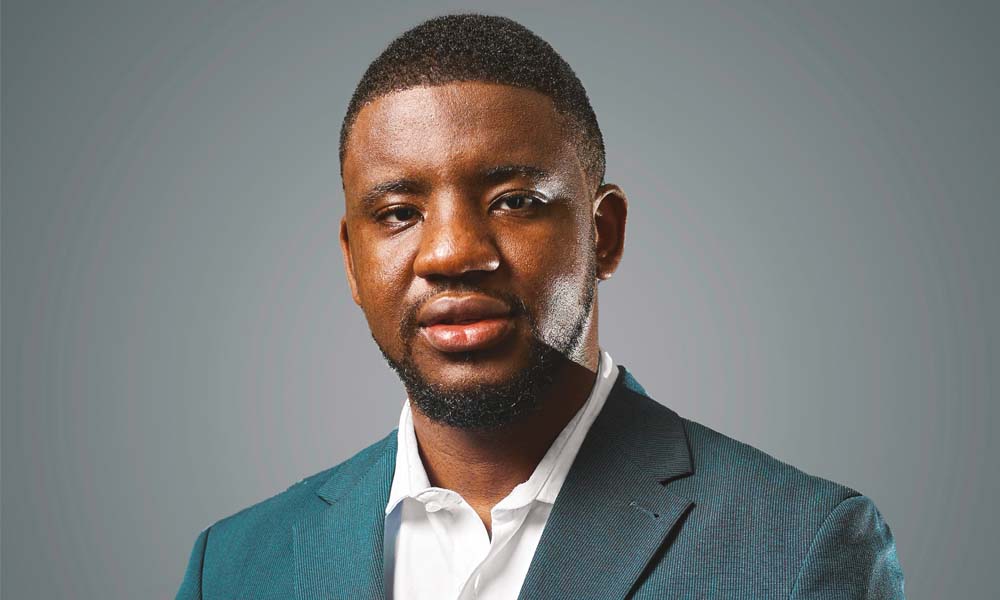
Back in 2024, when it came to interviewing Dr. Omar Maïga, POINT FOCUS chose the angle of democratizing a resource that seemed distant for ordinary people, although presented as essential for energy and ecological transitions: hydrogen. Two years later, your magazine finds Dr. Maïga, an expert in 3D geological and geophysical characterization of natural hydrogen reservoirs, to take stock, this time, of technological advances applied to geological exploration.
Still driven by the same enthusiasm and rare optimism, Dr. Maïga, head of HNAT Consult & Engineering, granted us this interview to discuss the African mining sector, with a particular focus on that of the Sahel, now undergoing significant change. This evolution is due as much to legislative reforms as to new approaches in the search for and exploitation of mineral resources. The African continent is thus seeing the emergence of more advanced methods, likely to ensure better control of its mining industry. A transformation driven, notably, by local companies determined to redefine sector paradigms.
● HNAT: a strategic shift.
The first and only African service company to have made natural hydrogen the core of its business, HNAT Consult has built recognized experience on the continent and beyond by conducting major projects around hydrogen, but also helium. These two substances, seen as a springboard towards a stronger, ecologically engaged Africa, are now at the heart of energy independence issues. However, while remaining committed to promoting these resources, HNAT Consult has chosen to make an important strategic shift with the creation of HNAT Engineering. “HNAT no longer focuses solely on gas-related services and engineering, notably hydrogen and helium, but also on the mining sector, with last-generation exploration methods and tools adapted to large-scale exploration, both nationally and at permit level.” Following this declaration, Dr. Maïga explains that this reorientation responds to growing demand and a real need for innovation in subsoil resource research. He now positions his company “both as an operator and a technological facilitator,” capable of designing and deploying its own workflows and exploration tools.
● Technology: key to mining sovereignty?
When considering the challenges of mining in Africa, particularly in Mali and the Sahel countries, the weakness of budgets allocated to geological research, the level of human capital and limited access to structured financing recur insistently. Without mastery of geophysical exploration, described as “vital and the sine qua non condition for discovering new resources” by Dr. Maïga, African states will not be able to have a real assessment of their potential.
Traditionally, most geophysical surveys are done by plane. However, these airborne campaigns are extremely expensive, require heavy logistics and depend almost entirely on international operators and foreign expertise. The result is often limited territorial coverage, underdeveloped local content, insufficient capacity building, and, in many cases, reduced sovereignty over the data itself. It is precisely on this point that HNAT Engineering intends to provide a breakthrough solution.
The company, through its Engineering division, offers African states AI-assisted remote sensing services, complemented by geophysical exploration drones. This approach, “first of its kind, offers secure, fast and locally cost-effective exploration tools for our countries.” According to Dr. Maïga, instead of relying exclusively on these costly, complex-to-mobilize airborne surveys, remote sensing technologies make it possible to acquire very high-resolution cartographic and structural data locally, in a much more flexible and affordable manner. They thus pave the way for new discoveries and more complete territorial coverage. Among the main benefits of these new approaches are more accessible exploration costs, better consideration of security constraints for field teams, and significantly reduced delivery times. “Instead of waiting several months for airborne campaigns to be organized and processed abroad, we can deliver exploitable maps and classified targets in a few days or weeks,” the expert emphasizes. As if to close the debate, Dr. Maïga insists: “This is particularly important in African and cross-border contexts, where budgets are limited, territories are vast and decision-makers need fast, reliable answers, without systematically outsourcing knowledge and data.”
● When will the Sahel benefit?
According to Dr. Maïga, the technologies offered by his company have the advantage of providing decision-makers in Sahel countries, without limitation, with genuine strategic tools for their mining sector. Indeed, “instead of raw data held and processed elsewhere, decision-makers receive clear priorities, uncertainties and next steps, with complete visibility and ownership.”
In other words, this type of approach significantly lowers the entry barrier. Governments and young companies alike can thus explore more intelligently, without massive budgets or systematic dependence on foreign operators. It also strengthens local capacities, national expertise and data sovereignty. At the same time, it accelerates discovery cycles and makes exploration of emerging resources, including critical minerals still largely overlooked, economically more realistic.
● Real, structured and competent local content.
The Sahel must therefore seize the opportunity offered by this technical and technological revolution. For HNAT Engineering, these solutions carried by national actors also constitute a concrete translation of local content regulations. With conviction, Dr. Maïga continues: “What we are building is real, structured and competent local content, plus a new exploration paradigm: lighter, faster, safer, more sovereign and more inclusive in our countries.”
For the Sahel, and in the context of the announced transformation of the Liptako-Gourma Integrated Development Authority (ALG), it is urgent to inscribe common projects in this new paradigm, whose technological flexibility is at the heart of the approach.
By Baba Sacko
A researcher from mining research.
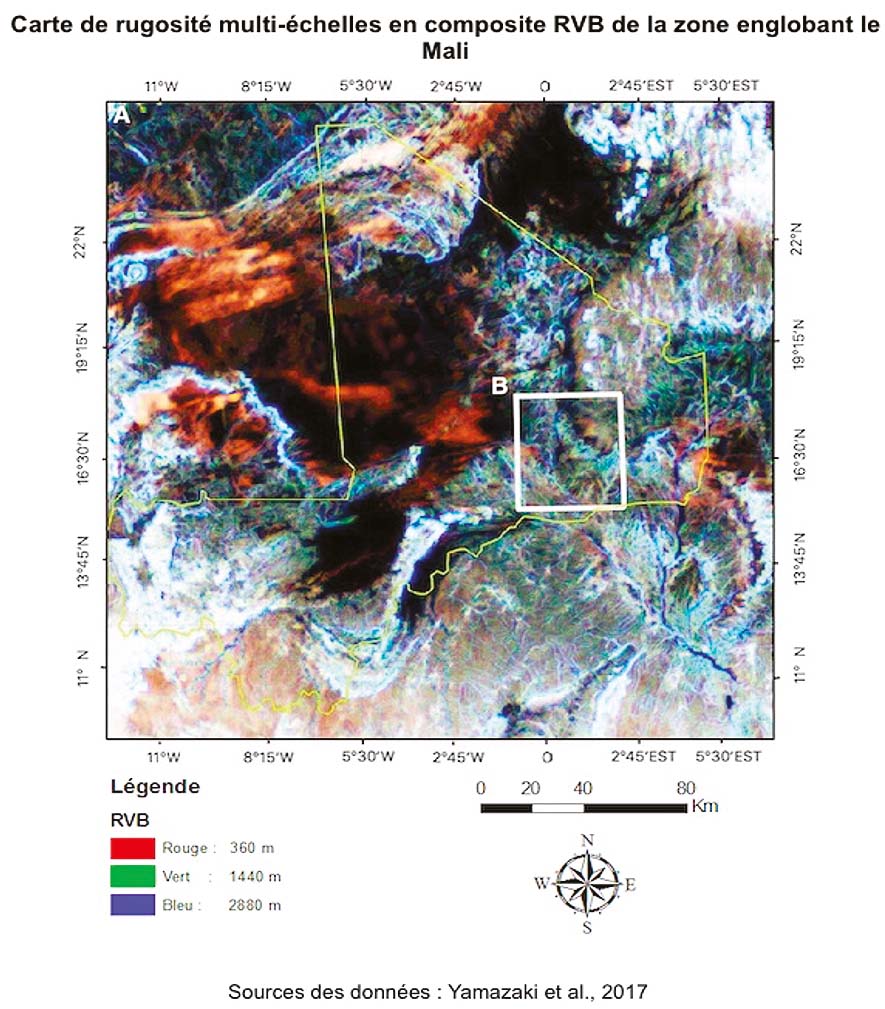
Now called to Harvard SEAS to contribute to global research on natural hydrogen, his core business, Dr. Omar Maïga previously worked extensively in mining research. He notably developed mapping methods based on the study of terrain roughness, an approach used to map large areas and inaccessible zones, such as the planet Mars. His work made it possible to produce the very first large-scale roughness map of all of Mali.
*(Illustration: Multi-scale RGB composite roughness map of the area encompassing Mali – Data sources: Yamazaki et al., 2017)*


