From Caracas to Ormuz: the real conditions of energy sovereignty
The sequence opened by tensions around Venezuela, then prolonged by the war now engulfing part of the Middle East, its repercussions on Gulf states and the question of the Strait of Hormuz, recalls a reality often invoked but less often closely examined: in the energy field, sovereignty never automatically follows from mere possession of the resource. It depends on a much vaster set of infrastructures, trade routes, industrial capacities, financing, power dynamics and regional stability.
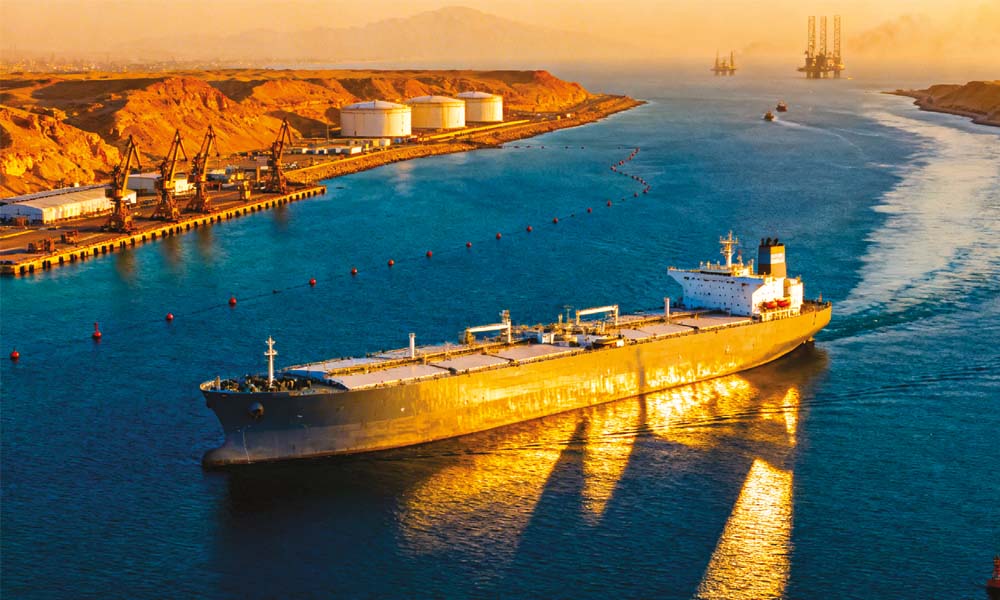
The question of the Strait of Hormuz provides an immediate illustration of this preamble. Approximately 20 million barrels per day still transited through it in 2025, representing nearly 20% of global petroleum liquids consumption and about a quarter of global maritime oil trade. Bypass routes exist, but they remain limited. Saudi and Emirati pipelines can only absorb part of the flows. Such concentration alone makes Hormuz a lasting nerve center of the global energy system.
In such a context, a local military crisis very quickly spills beyond its initial theater. Markets certainly watch the risk of physical flow interruption, but they scrutinize gradual disruptions just as much: rising insurance premiums, freight tension, lengthening delays, terminal vulnerability, shipper nervousness, exposure of coastal installations. Fragility appears not only in the extreme hypothesis of a prolonged complete shutdown. It is also visible in the accumulation of constraints that make the whole system more expensive, more uncertain and more nervous.
● Incomplete sovereignty in practice.
For African countries, the lesson is twofold. On one hand, any lasting shock to flows or prices quickly affects economies dependent on imported fuels, logistics chains, transport, industry, agriculture and the extractive sectors themselves. Several African economic officials were already warning in March 2026 about the risk of this oil tension stifling recovery and complicating monetary management in several countries. On the other hand, this sequence brings to light a fundamental question that extends well beyond oil. A state may hold significant reserves yet remain dependent on foreign infrastructure, external markets, insurance circuits, imported technology, refining capacities outside its borders or maritime routes it does not control. Legal sovereignty then exists, but it remains incomplete in practice. Decision-making power does not cover the entire chain that transforms the resource into wealth, then into influence. The parallel between Venezuela and the Gulf region deserves, from this angle, to be observed coolly. In both cases, the central question is not simply the volume of available resource. What is at stake is the real margin for maneuver that this resource allows in a constrained international environment. Political control of the subsoil does not erase external pressures, dependence on certain routes, the weight of financial circuits, exposure to sanctions, or logistical vulnerabilities.
● An African reading of an international situation.
For Africa, this reading also applies to minerals. Copper, lithium, bauxite, gold, cobalt or oil do not by themselves open the door to robust economic sovereignty. When extraction takes place locally but processing, refining, finance, insurance, technologies and a decisive part of commercialization remain concentrated elsewhere, control remains partial. Many current debates on mining codes, local content, local processing or industrial upgrading revolve around this very concrete difficulty.
Nigeria is an interesting case study in this respect. For a long time, the country combined two contradictory statuses: major crude producer and massive importer of refined fuels. The Dangote refinery was designed to correct this imbalance. With an announced capacity of 650,000 barrels per day at full capacity, it introduces a new scale in African refining and changes the country’s place in the oil chain.
Decisions taken in early 2026 point in the same direction. Abuja suspended, for the second consecutive month, gasoline import licenses, citing priority given to local supply when deemed sufficient. At the same time, Nigerian authorities sought to present the country as a possible support point for diversifying global energy supply during a period of tension on Gulf routes. Reuters noted that the refining capacities developed around Dangote strengthened the country’s resilience to a shock on refined products.
It would be excessive to see this as fully realized sovereignty. A large refinery does not erase financing needs, technological dependencies, maintenance constraints, monetary arbitrations, or regional trade sensitivities. On the other hand, it moves the problem to another level. The country no longer simply exports crude that would then return as refined products. It seeks to retain a larger share of value on its soil, serve its domestic market and, over time, extend its influence to neighboring markets. Dangote’s first gasoline export to Cameroon, at the end of 2024, was already heading in this direction.
● Densifying sovereignty through tangible capacities.
This case interests all of Africa because it gives concrete form to debates often treated abstractly. For years, the continent has talked about local processing, added value, economic sovereignty, and reduction of external dependencies. The refinement of these ambitions, however, depends on very material objects: refineries, logistics corridors, electricity grids, ports, industrial financing, supply contracts, regulatory stability, maintenance capacities, regional outlets. Slogans can announce a direction. Infrastructures determine what actually becomes possible.
The current crisis around Hormuz precisely reminds us of this. In energy as in mining, a strategic resource remains exposed as long as its circulation routes, processing tools and part of its valorization levers still escape those who extract it. Geography continues to impose its constraints. So does global trade. States wishing to derive more than a starting rent from their resources therefore face the same requirement: densify their sovereignty through tangible capacities.
From Caracas to Hormuz, the lesson is the same. The era insistently reminds us that subsoil wealth has never by itself constituted a guarantee of power. It is the means of transformation, routes, industrial tools, commercial circuits and financing margins that define its real scope. For Africa, the question is therefore not only to affirm its sovereignty over its resources. It is to build, piece by piece, the material conditions that allow this sovereignty to have weight.
By Toumani Zerbo
ORMUZ: KEY FIGURES
A narrow maritime corridor between Iran and Oman, at the entrance to the Gulf, the Strait of Hormuz plays a central role in global oil and gas circulation. POINT FOCUS provides some key figures to measure its importance.
- 20 million barrels per day transited through the Strait of Hormuz in 2025.
- 20% of global petroleum liquids consumption depends on this passage.
- 25% of global maritime oil trade corresponds to the same volume.
- 3.5 to 5.5 million barrels per day are the estimated bypass capacities via pipeline.
- 80% of oil flows transiting through Hormuz are destined for Asia.
- 19 to 20% of global LNG trade also passes through this strategic zone.