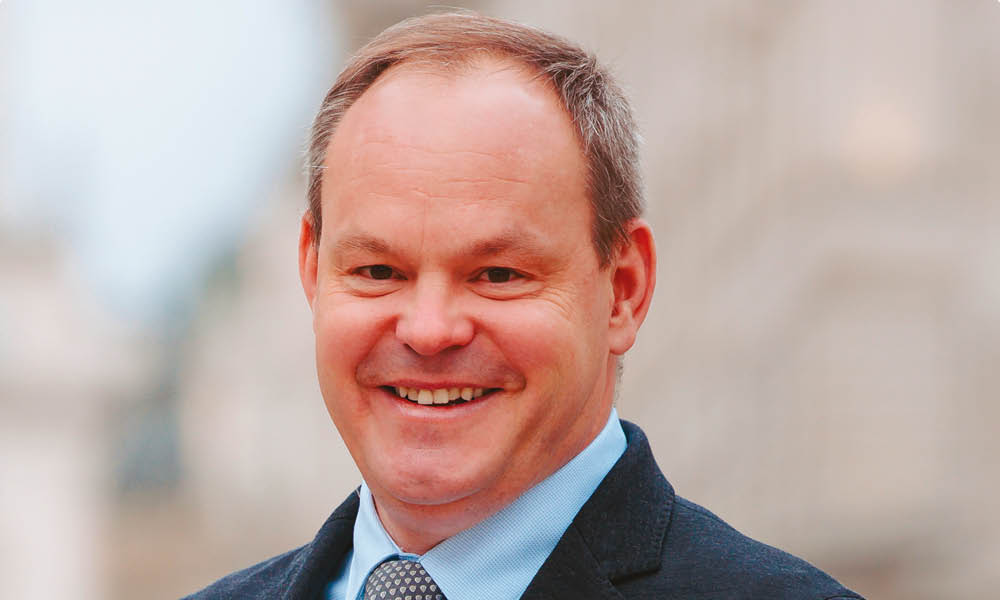
Chris Eger, CEO of Resolute Mining: “We have made a commitment to continue our investments in Mali.”
In a Malian context marked by the revision of the Mining Code and the adoption of a law on Local Content, Resolute Mining finds itself at a strategic crossroads. Present in Mali through two operating companies, SOMIFI and SOMISY, the group must deal with a more demanding State, communities awaiting concrete benefits, and an unstable Sahelian geopolitics. Appointed Managing Director in December 2024, Chris Eger, with twenty-five years of financial and mining experience, shares here his reading, his commitments, and his vision for the future of Resolute Mining’s operations in Mali.
POINT FOCUS: Mali adopted a new Mining Code in 2023 that redefines the balance of revenues between the State and investors and strengthens the State’s place in companies. How does Resolute Mining fit into this new framework, and how do you work with the State to build a sustainable partnership in Mali?
CHRIS EGER: The new Mining Code has redefined the balance between the State and investors, and we approach this new framework in a spirit of partnership. We are seeking with the State the sustainable balance that serves both Mali’s interests and the viability of our operations. Our approach is to dialogue, respect the rules in force, and build a stable relationship that allows SYAMA to continue making contributions to the country in the long term. I must say that the new Code was poorly received by international investors, and this explains the reduction in gold production between 2024 and 2025. It is due to an adaptation period for investors who wanted to understand how the new Code would work. At Resolute, we have made great efforts to reassure these investors about the production level that will return to normal and could even increase, and about the importance for SYAMA to follow this new Code. It is also important that we continue to dialogue to grasp all the subtleties of the Code’s implementation in order to keep Mali in investors’ esteem and thus increase revenues from gold mining.
P.F.: In this context, can we say that trust between Resolute Mining—and more broadly international investors—and the Malian State is now restored, or does it remain to be rebuilt?
C.E.: I can say that we are 80% in the right direction. We have made many efforts to discuss what works and what doesn’t. I think we still have two or three things on which we will need to agree. But overall, we are moving in the right direction.
P.F.: Does this mean that today, despite this new environment, Resolute is continuing its investments and projects in Mali? What are your company’s short-term prospects in the country?
C.E.: We have made a commitment to continue our investments in Mali, and that is what we are trying to do with a recent major investment of nearly one hundred million dollars (about 57 billion F CFA) to modernize our plant. Historically, the SYAMA site produces between 200 and 220 thousand ounces per year. Last year, we produced 177 thousand ounces, and this year we will produce less than 200 thousand ounces. It is simply not an option for us to continue seeing our production decline. Therefore, we must continue efforts to improve the plant’s capacities, and this requires significant capital contributions in the future. We have significant reserves, and we must maintain dialogue with employees and the State to make a profit, unlike recent years when the company lost a great deal of money. Despite all the problems Mali has experienced, Resolute Mining maintains its commitments, and we will do everything possible to stay and find the levers to return to our best production level. Mali is one of our best assets.
P.F.: Resolute Mining has set itself the ambition of reaching 500,000 ounces of gold per year by 2028. Do you think, taking into account the difficulties you mentioned and your most optimistic projections, that your group will succeed in achieving this objective by 2028?
C.E.: I hope so! We have the infrastructure and, as I said, the reserves are significant. We may need to change the way we work to achieve our goals. On another level, we need to better understand the developments in the international market, which has somewhat lost confidence in Mali as a destination. But with our projections and the resources we are injecting, we believe we can reverse the trend and regain that confidence. However, this is not the prerogative of Resolute Mining alone. It is a collective effort with national and regional authorities, communities, mine workers, and even shareholders.
P.F.: You emphasize the need to work with everyone in a context where Mali has adopted a law on Local Content. How does Resolute welcome this law, and how does your commitment to local employment, Malian suppliers, and the rise of national executives translate concretely?
C.E.: We welcome this law favorably because it aligns with our own ambition and commitments to see the communities surrounding the mine develop. Concretely, this translates into local jobs, for example. We have more than three thousand one hundred employees, of whom only fifty are not nationals. And this trend of reducing expatriate jobs has been ongoing for two years. Our actions and achievements clearly show our desire to implement the provisions on Local Content, because this law is not a constraint for us, but rather a lever to better integrate our company into the national and local economy and, above all, to have a lasting presence.
P.F.: You indicated in a recent interview that part of the financing of your operations relies on the Malian banking system. How does Resolute Mining judge the capacity of the national banking ecosystem to support large mining groups, and do you see this as a partnership that is bound to strengthen?
C.E.: We currently work with three local banks, and I want to say that it works very well. Their capacities rise to the level of mining needs for a certain number of activities carried out locally. These banks know both the Malian and international markets. For me, this is the primary source of financing. But it must be admitted that the level of investment can quickly become colossal in mining projects. If we need 500 million dollars (about 284 billion F CFA), local banks can help raise part of that fund, but we will need to use international relays. We will also need financial markets to meet our various financing needs. But again, collaboration with Malian banks is going well.
P.F.: On a completely different note, since 2019, Resolute Mining, particularly at the SYAMA mine, has been developing a hybrid solar power plant project intended to reduce energy production costs. Where is this project today, and has solar become an industrial reality for your group in Mali?
C.E.: It has been our ambition for about ten years to make our mining site 100% solar-powered. We have explored the subject extensively, and the major difficulty we have is that no company at the national level is capable of carrying out a vast solar installation project meeting the mine’s requirements. And another difficulty is that, for security reasons, international companies have trouble coming to Mali for this kind of project. But in any case, we are looking at what is being done elsewhere, and we keep this objective within reach.
P.F.: If we project ourselves into the distant future and look back at your tenure at Resolute Mining, what personal legacy do you wish to leave in Mali? In other words, what will have defined a successful presence for you in this Sahelian country that is increasingly turning toward the Confederation of the Alliance of Sahel States (AES)? Can we imagine tomorrow Resolute Mining carrying out projects at the AES level?
C.E.: My ambition for SYAMA and Mali is not determined by the number of ounces of gold produced, but in terms of local development and impact on the national economy. I work to have a balance between the interests of the State, communities, and investors in a spirit of balanced partnership. In the immediate future, I am working to bring our production back to an acceptable level, and further down the line, I ambition to see the sites of our mining complex managed solely by Malians.
Interview by: Baba Sakho