3 Good Reasons… to Subsidize Household Access to Solar Energy
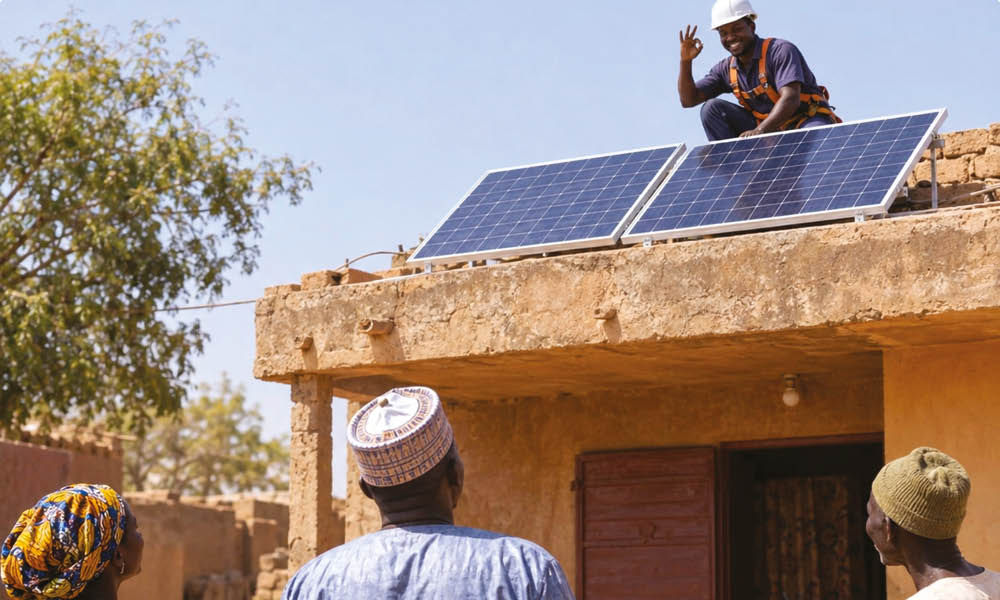
Strong demographic growth in Africa, combined with external factors that cause fluctuations in the cost of fuels used for thermal electricity production, places enormous pressure on household electricity distribution companies. Regular load-shedding and the high cost of electricity have thus favored the rise of solar in many African countries. However, the cost of a solar installation remains out of reach for many households. Therefore, States should facilitate household access to solar energy by devising solutions to subsidize its purchase and installation. Here are three good reasons that argue in favor of such a policy in Mali.
1. Reduce Pressure on the National Company EDM-SA.
EDM-SA (Énergie du Mali – Société Anonyme) faces a chronic production and distribution crisis. By encouraging solar self-production, the State would reduce pressure on the grid, thus limiting load-shedding and improving electrical stability. In 2022, the company reported an average annual consumption per subscriber of 2,643 kWh. In 2025, while EDM-SA had 934,151 low- and medium-voltage customers, this average consumption had fallen to 1,465 kWh/year. This evolution reinforces the interest of a policy aimed at relieving pressure on EDM-SA’s production and distribution capacities.
2. Strengthen Energy Sovereignty.
Mali, a landlocked country facing a major security crisis, remains heavily dependent on abroad for its energy supply. Part of its electricity is imported, while its thermal production itself relies on fuels from abroad. This dependency represents a significant financial burden and a permanent challenge for EDM-SA, due to import costs, fluctuations in world prices, and cash flow tensions. To initiate true energy sovereignty, the State must subsidize access to solar in order to reduce dependence on external suppliers and strengthen its strategic autonomy.
3. Prepare the Ground for a Future Lithium Processing Industry in Mali.
By supporting the rise of solar, Mali would also contribute to the development of a national market for battery storage solutions. The country, now a lithium producer, displays its desire to go beyond the simple extraction of its mineral resources and to gradually increase local processing. The rise of solar uses could thus create, in time, outlets for a future industrial lithium sector, while stimulating today the solar market and jobs related to installation, maintenance, and distribution.