Kerosene: Nigeria Overtakes the United States on the European Market
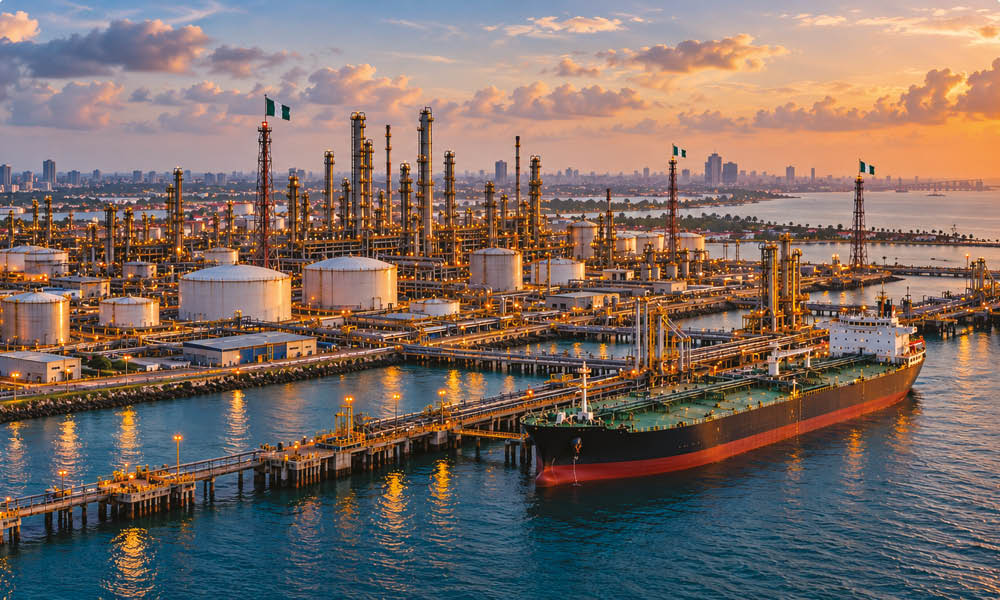
As of June 2026, Nigeria rose to the top rank of aviation fuel suppliers to Europe, ahead of the United States. A performance driven by billionaire Aliko Dangote’s refinery in Lagos, which illustrates the industrial rise of the West African giant and its new weight in the international trade of refined petroleum products.
According to data from S&P Global Commodity Insights, reported by Business Insider Africa, the Dangote refinery exported some 466,000 tonnes of kerosene to Europe in June 2026, compared to 232,000 tonnes in May. This is the highest monthly volume recorded since Nigeria became a net exporter of aviation fuel in 2024, thanks to the start of production at the Dangote refinery. Over the same period, U.S. exports to Europe fell from 560,000 to 399,000 tonnes. In April, they had nevertheless reached a record of 818,000 tonnes. These variations testify to the rapid recompositions of a market subject to geopolitical tensions, transport costs, and demand fluctuations.
Maritime Routes Allowing the Strait of Hormuz to Be Bypassed.
For Europe, the rise of the Dangote refinery, the largest in Africa, represents a new source of supply. Nigerian deliveries benefit notably from maritime routes allowing the Strait of Hormuz, particularly exposed to tensions in the Middle East, to be bypassed. This progress occurs in a context of price easing. In Northwest Europe, the reference price of kerosene fell from $1,694 per tonne (about 990,000 F CFA) in March to $982 (about 575,000 F CFA) at the end of June, under the effect of sustained refinery production and summer aeronautical demand lower than forecast. For Nigeria, this breakthrough illustrates the new perspectives opened by the development of its refining capacities. The country is gradually strengthening its presence on international fuel markets, while the Dangote refinery is establishing itself as a major player in the African energy sector.
Guinea: Kiniero Accelerates Gold Sales Before Mandatory Local Refining
The Kiniero gold mine, operated by PDI Gold, recorded a 59% increase in sales in the third quarter of 2026. According to the report published by the company on October 5, 61,149 ounces of gold were sold between July and September, compared to 38,470 ounces in the previous quarter. This progress occurs while production fell by 16%, to 45,599 ounces. The gap is mainly explained by the sale of part of the previously constituted stocks. These results coincide with the entry into force of new requirements imposed by Guinean authorities. Announced in June, the reform provides that gold produced in the country must now be refined locally before export. Conakry thus intends to develop an industrial processing activity and retain more added value on its territory, beyond the mere extraction of ore.
Senegal: An Energy Partnership with Algeria
Senegal and Algeria are strengthening their cooperation in the energy sector. On the occasion of an official visit to Algiers on October 3 and 4, 2026, the Senegalese Minister of Energy and Petroleum, El Hadji Abdourahmane Diouf, accompanied the signing of a memorandum of understanding between the National Electricity Company of Senegal (Senelec) and the Algerian public group Sonelgaz. This partnership should promote exchanges of expertise and technical cooperation in the electricity sector. The Senegalese delegation notably visited the Algerian national electricity grid control center and Sonelgaz industrial facilities. Discussions also focused on hydrocarbons, with the prospect of a rapprochement between the national companies Petrosen and Sonatrach. For Dakar, this cooperation is part of a strategy to develop its production capacities and modernize its energy system, while the country intends to further valorize its national gas and oil resources.
Senegal: A Second Oil Refinery in Project
Senegal is considering the construction of a second oil refinery, with a processing capacity of 4 million tonnes per year. A memorandum of understanding was signed on September 23, 2026, in New York, between the African Refining Company (SAR) and the Turkish company Yamata, in the presence of President Bassirou Diomaye Faye. The planned investment is between 2 and 3 billion dollars (about 1,200 to 1,800 billion F CFA). The partnership also provides for the modernization of the existing Mbao refinery, for an amount estimated between 300 and 500 million dollars (about 175 to 295 billion F CFA). The new equipment should notably make it possible to process crude oil from the Sangomar offshore field, which came into production in 2024. The project could also open new perspectives in petrochemicals and strengthen Senegal’s capacities to supply national and sub-regional markets with refined petroleum products.
Côte d’Ivoire: First Gold Pour at the Koné Mine
The Canadian company Montage Gold announced, on September 27, 2026, the first gold pour of its Koné mine in Côte d’Ivoire. Carried out the day before, this operation produced some 1,140 ounces of gold, several months ahead of the initial schedule which provided for a start in the second quarter of 2027. Mining began processing ore on September 8, thanks to the early commissioning of its oxide ore processing circuit. More than 400,000 tonnes of ore had already been processed at the time of the announcement. The company aims for commercial production on this first circuit before the end of 2026, while the construction of facilities intended for hard rock ore must be completed in 2027. The site has mobilized about 3,600 jobs, of which more than 95% are occupied by Ivorians. Ultimately, the operation should generate some 1,500 permanent jobs.
Ghana: Government Revises Its Mining Code Project
Ghana is preparing a new version of its mining bill, after concerns expressed by several companies in the sector. According to information published by Reuters on October 9, 2026, the government is notably considering extending to 20 years the maximum duration of new operating permits, compared to 15 years in the project currently before Parliament. Legislation in force authorizes concessions of up to 30 years. The reform aims to strengthen State control over mineral resources, favor their local processing, and improve national economic benefits. Certain provisions, notably those concerning the State’s special rights in mining companies, have also sparked discussions with industrialists. The continent’s leading gold producer, Ghana is seeking to modernize its regulatory framework while preserving its attractiveness to international investors. The new version of the text must still be examined by parliamentarians.
Nigeria: A $300 Million Fund for Renewable Energy
Nigeria announced, on September 22, 2026, the commercial launch of a $300 million fund (about 175 billion F CFA) intended for the development of decentralized renewable energy. Named the Nigeria Distributed Renewable Energy Fund, this mechanism is carried notably by the Nigerian Sovereign Investment Authority (NSIA), Africa50, and the Sustainable Energy for All (SEforALL) organization. Its objective is to mobilize financing for mini-grids, stand-alone solar installations, and other solutions allowing populations and businesses far from traditional electricity grids to be supplied. The launch marks the transition to the operational phase of the fund, with the possibility of starting to commit investments. This initiative is also part of the continental Mission 300 program, which aims to allow 300 million additional Africans to access electricity by 2030. Nigeria thus intends to accelerate electrification while supporting local economic activities.
Benin: Sèmè Oil Back on the International Market
After nearly three decades of interruption, Benin is preparing its return to the international crude oil market. A first cargo of 250,000 barrels, from the Sèmè offshore field, is to be marketed during the month of October 2026. Exploitation of the deposit, located off the southeast of the country, resumed in March under the leadership of Akrake Petroleum Benin, a subsidiary of the Singaporean group Rex International Holding. Production currently reaches about 3,000 barrels per day, against an initial objective of 5,000 to 6,000 barrels. Technical difficulties encountered during the first drillings slowed the ramp-up of the facilities. Operated between 1982 and 1998, the Sèmè field had already produced some 22 million barrels before its shutdown. This relaunch marks a new stage for the Beninese oil industry, with the prospect of additional revenues and a gradual development of national production.
Uganda: More Than 130 MW of Gas Power Plants in Project
Uganda is continuing the development of its energy infrastructure by valorizing the gas associated with its future oil fields. Two gas power plant projects, linked to the Tilenga and Kingfisher operations, have obtained their authorizations, according to information published in early October 2026 by African Energy. The facilities represent a cumulative capacity of about 134 MW, including 80 MW for Tilenga and 53.7 MW for Kingfisher. The electricity produced is to mainly supply oil operations, notably processing equipment and industrial facilities necessary for hydrocarbon exploitation. Surpluses could also be injected into the national electricity grid, thus contributing to diversifying the country’s production sources. These projects accompany the rise of the Ugandan oil industry, concentrated around Lake Albert. They illustrate Kampala’s desire to locally valorize gas resources from oil extraction.
DRC / Zambia: A 700 MW Electrical Interconnection for the Copperbelt
A strategic agreement was signed on October 6, 2026, in Kinshasa to develop a cross-border power line linking Kalumbila in Zambia to Kolwezi in the Democratic Republic of Congo. About 200 km long, this infrastructure will have a transport capacity of 700 MW. The project, estimated at $300 million (about 176 billion F CFA), brings together the DRC Strategic Investment Fund (FIS-RDC), EnPower, Trafigura, and Gridworks. It will allow up to 550 MW of electricity to be imported to the Katanga mining region, which faces a structural energy deficit exceeding 1,000 MW. The objective is to secure the supply of mining operations and processing industries, while opening new export perspectives for Zambian producers. The main authorizations have already been obtained. Gridworks is to become the majority shareholder of the project, while Trafigura will participate in organizing loan financing.
Zambia: A 25-Year Contract for a 500 MW Solar Plant
The Zambian public electricity company ZESCO has signed a 25-year power purchase agreement with the Hungarian group EnerSynk for the development of a 500 MW photovoltaic plant in the Copperbelt mining province. Announced in September 2026, this agreement should allow the promoter to initiate the next stages of the project: technical studies, environmental procedures, mobilization of financing, and preparation of works. Construction is envisaged in several phases, with a first tranche of 300 MW, followed by two extensions of 100 MW each. For Zambia, heavily dependent on hydropower, this project participates in the diversification of the national energy mix. Drought episodes have weakened dam production, while industrial demand, notably that of copper mines, continues to grow. EnerSynk also displays ambitions for larger-scale development on the Zambian solar market.
Zambia: Mercuria Commits $250 Million in the Electricity Sector
The international commodities trader Mercuria is strengthening its presence in the African energy sector. The group has concluded with the company Exergy a financing agreement of $250 million (about 147 billion F CFA) intended for the development of electricity projects in Zambia. Announced in late September 2026, this investment is to support electricity production and transport infrastructure, notably through the subsidiaries Lunzua Power and Lusitu Transmission & Distribution. The agreement remains subject to certain regulatory authorizations. The precise modalities for distributing financing between the different projects have not yet been communicated. This operation occurs as Zambia continues the opening of its electricity market to investors and independent producers. New regulatory provisions notably allow private companies to produce, transport, and market electricity to industrial customers. For Mercuria, this partnership also opens perspectives on the regional electricity market in Southern Africa.
Tanzania: Gold Certification at the Heart of a Trial in London
A trial opened on October 7, 2026, before the British justice system, calls into question the London Bullion Market Association (LBMA), an organization that notably establishes international standards applicable to gold refineries. The case concerns the death of two artisanal gold miners, shot dead in 2019 during incidents near the North Mara mine in Tanzania. The victims’ families reproach the LBMA for having maintained the accreditation of a refinery processing gold from this operation, despite accusations of violence linked to mining activities. The association contests all responsibility. It emphasizes that it exercises a mission of standardization and monitoring of refineries, without direct control over mines or security forces. This trial, expected to last several weeks, could have significant consequences on the obligations of certification bodies and on the responsibility of players involved in international precious metals supply chains.
Egypt: Genel’s Acquisition of Capricorn Energy Takes Shape
The oil group Genel Energy is advancing in its project to acquire Capricorn Energy, whose main operating assets are located in Egypt. On October 9, 2026, Capricorn confirmed the continuation of the acquisition process, after the improvement of the offer presented by Genel in late September. This new proposal benefits from the support of Capricorn’s board of directors, which had also been the subject of a competing offer from the Norwegian group DNO. One of the main Egyptian regulatory conditions has now been satisfied. A final authorization remains necessary to finalize the operation. Both companies estimate that the merger could become effective before the end of 2026. This acquisition would allow Genel Energy to strengthen its presence in the Egyptian oil sector by integrating Capricorn’s exploration and production activities. It occurs in a context of recomposition of oil and gas asset portfolios in North Africa.
United States: Google Secures 3.6 GW of Electricity with Constellation Energy
Google and Constellation Energy announced, on October 6, 2026, a partnership intended to strengthen the electricity supply of data centers, whose needs are increasing with the development of artificial intelligence. The agreement provides for the modernization of eleven existing nuclear reactors in Illinois, Pennsylvania, and New Jersey. These works should add 890 MW of nuclear power to the PJM regional grid. Google has committed for twenty years to support these investments. A second fifteen-year agreement covers the supply of 2,700 additional MW. In total, the partnership represents nearly 3.6 GW of contracted electrical capacities. It illustrates the growing importance of energy security for digital giants, which are multiplying long-term supply agreements.
Chile / United States: A $2 Billion Contract for Lithium
The trader Trafigura signed, on October 12, 2026, a ten-year supply contract with the American company EnergyX, covering 100,000 tonnes of lithium-based products intended for the battery industry. Valued at $2 billion (about 1,170 billion F CFA), this agreement concerns two projects under development: Black Giant in Chile and Lonestar in Texas. The first is to produce lithium carbonate, the second lithium hydroxide. Their entry into production is envisaged for 2028 and 2029 respectively. EnergyX is developing a direct lithium extraction technology aimed at improving metal recovery from brines. This commitment allows Trafigura to secure its future supplies in a context of growing needs for batteries for electric vehicles and energy storage.
Argentina: Eramet Considers $350 Million Additional in Lithium
The French mining group Eramet is considering investing $350 million additional (about 205 billion F CFA) to increase the capacities of its Centenario-Ratones lithium site in the province of Salta, Argentina. Announced on October 1, 2026, this project would add 11,000 tonnes per year of lithium carbonate to the 24,000 tonnes of nominal capacity of the existing plant. Eramet wishes to benefit from the Argentine large investment incentive regime (RIGI), which provides tax and customs advantages as well as regulatory stability over thirty years. The pre-feasibility study is completed, but the final investment decision remains to be made. This extension is part of the group’s strategy aimed at developing its activities in lithium, an essential raw material for batteries.
Europe: Low Gas Reserves Worry as Winter Approaches
Europe is approaching the winter of 2026-2027 with unusually low natural gas reserves. As of October 12, European Union storage was about 73% full, compared to a five-year average close to 89%. Disruptions in liquefied natural gas (LNG) exports from the Middle East are strengthening competition between European and Asian buyers. According to analysts interviewed by Reuters, reserves could reach only 75 to 78% at the beginning of November, significantly less than in previous years. Gas prices have already risen sharply, with repercussions expected on consumer bills and industrial costs. The total ban on European imports of Russian LNG, planned for 2027, could accentuate tensions. The evolution of supplies and weather conditions will be decisive for market balance during the winter.