Burkina Faso: Houndé, when the mining fund finances visible infrastructure.
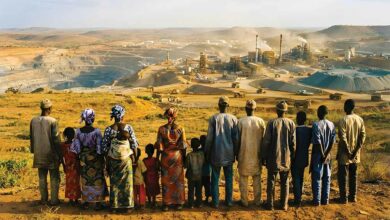
Burkina Faso offers a useful point of comparison with Mali. Established by the 2015 Mining Code, the Local Development Mining Fund (FMDL) aimed to redistribute part of extractive wealth to communes and regions. The mechanism was revised by the Mining Code adopted in July 2024 and is now called the Development Mining Fund (FMD). Its financing is still based on a contribution from mining companies equivalent to 1% of their monthly turnover excluding taxes or the value of extracted products, to which is added 20% of proportional royalties collected by the State.
Since the implementing decree of May 2025, the resources of the Burkinabe FMD are distributed between endogenous development projects and communal development plans on the one hand, and the Patriotic Support Fund on the other. The main interest of this model lies in its mandatory nature. It is neither a CSR action left to the discretion of a company nor a one-off response to a local tension. Framed by law and monitored by public authorities, it organizes the redistribution of part of mining revenues. Community development is therefore no longer just a matter of promises: it has a dedicated financing mechanism.
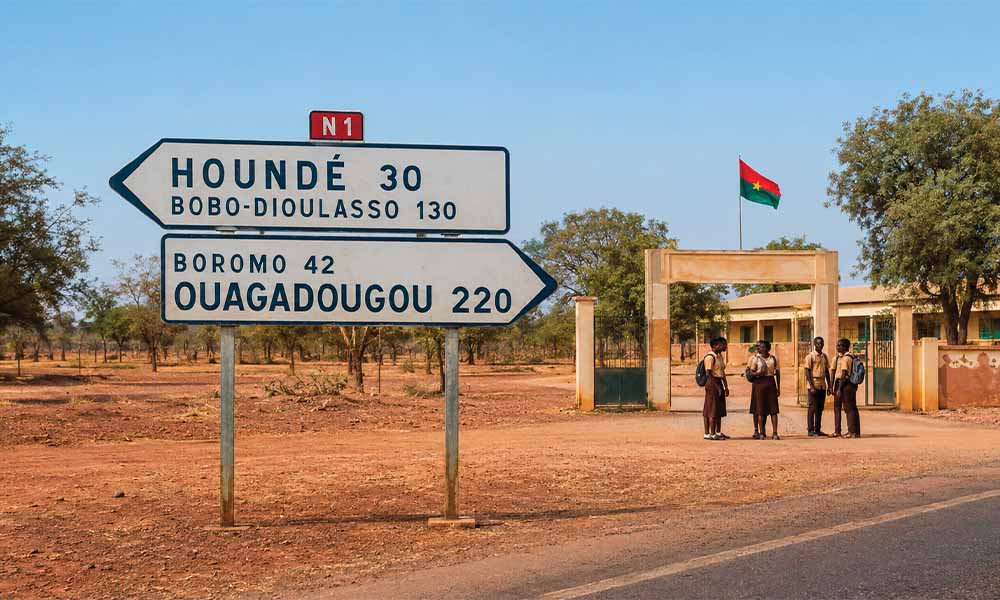
The commune of Houndé concretely illustrates the effects of the first version of the mechanism. Located in the current Guiriko region, formerly called Hauts-Bassins, it hosted two mining companies, Houndé Gold Operation S.A. and Bouéré Dohoun Gold Operation S.A., as well as three exploration companies, all subsidiaries of the Endeavour Mining group. According to a report by the daily Sidwaya published in April 2022, the municipality had received, since the operationalization of the Mining Fund, more than 4.5 billion CFA francs intended to finance local investments.
A concrete redistribution, but persistent fragilities.
The achievements recorded give a measure of what such a mechanism can produce. In primary education, financed operations included the construction of five three-classroom schools, twelve classrooms to complete four schools, and two three-classroom Franco-Arab schools. Added to this were the purchase of school furniture, rehabilitation of establishments, construction of fences and latrines, and completion of work in preschool centers. The announced amount exceeds 401 million CFA francs. At the secondary level, approximately 68 million CFA francs were allocated to two four-classroom general education colleges in Dankari and Siéni, as well as the administrative block of the Houndé municipal high school.
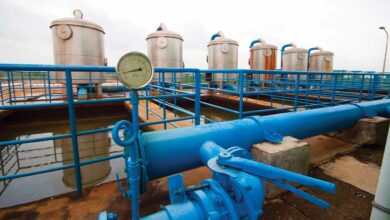
Health and drinking water sectors also benefited from significant investments. Over 285.2 million CFA francs financed the acquisition of health equipment and the construction of three health and social promotion centers in Houndé sector 3, Dankari, and Laho. In the water sector, nineteen autonomous water points equipped with solar panels, water towers, and fountains were built: six in the town of Houndé and thirteen in surrounding villages, for over 212 million CFA francs. The Fund also supported the commercial sector with the construction of about fifty street shops.
The existence of resources does not, by itself, guarantee development.
Financing continued. According to Endeavour Mining’s 2025 balance sheet, relayed by Sidwaya in March 2026, the Houndé and Mana mines together paid 210 billion CFA francs to public revenues and 12.7 billion CFA francs in development mining funds. In Houndé, the company also mentions 3,000 students sensitized on sexual and reproductive health, the creation of 17 health clubs in partner schools, and the construction of a modern barracks for the mobile gendarmerie squadron. These figures, communicated by the group, do not however allow isolating Houndé’s share in mining fund payments.
Houndé nevertheless reminds us that the existence of resources does not, by itself, guarantee development. In 2022, several projects remained pending, some health centers were not yet completed, and operational difficulties affected certain infrastructures. Beyond this case, the audit by Burkina Faso’s Court of Accounts emphasized that the effectiveness of the mechanism depends on the relevant selection of projects, the effective availability of resources, the monitoring of investments, and the ability of beneficiary local authorities to report on their use.
The Burkinabe case thus provides a useful lesson: a mining fund can produce visible and measurable achievements, but its real impact depends on the capacity of local authorities to plan, execute, and maintain investments, and then report on the use of resources mobilized on behalf of communities.
By Toumani Zerbo
Official sources: Burkina Faso Court of Accounts, Final Performance Audit Report on the Use of Local Development Mining Fund Resources in Local Authorities, fiscal years 2017 to 2021, July 2023; Burkina Faso, Law No. 036-2015/CNT of June 26, 2015, establishing the Mining Code; Law No. 016-2024/ALT of July 18, 2024, establishing the Mining Code; Decree No. 2025-0582/PRES/PM/MEMC/MEF/MATM/MEEA of May 12, 2025, establishing the methods of collection, distribution, management, and control of the use of Mining Funds.