Mining and energy news around the world.
DRC: 85% of diamonds come from artisanal mining.
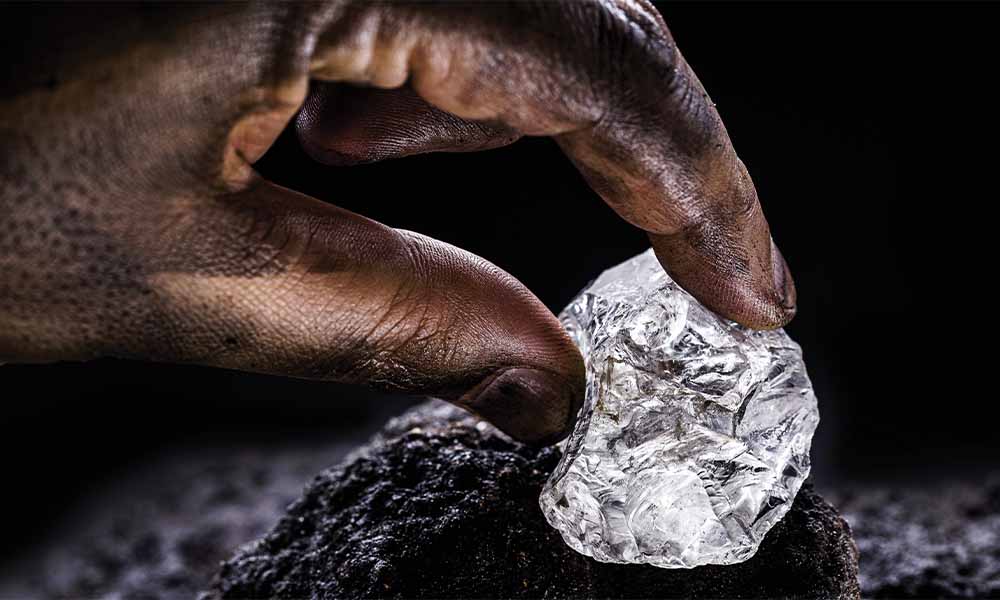
The Democratic Republic of Congo remains one of the world’s leading diamond producers. This position, however, relies less on large industrial operations than on a multitude of artisanal sites, concentrated in the Kasaï provinces. According to official data, national production fell from approximately 13 million carats in 2021 to 8.1 million in 2025. Industrial exploitation, dominated by the Société Anhui-Congo d’investissement minier (SACIM), represented only slightly more than one million carats. Artisanal mining constitutes an essential source of income for communities. But the dispersion of sites, inadequate equipment, and the weight of informal networks complicate volume tracking, worker safety, and public revenue collection. Part of the production escapes official channels.
Traceability, the key to formalization. In June 2026, a first batch of 103.77 carats of traceable Congolese artisanal diamonds was put up for sale in Antwerp as part of the OrigemA project. The system brings together six cooperatives from the Tshikapa and Kazumba regions and records each stage, from extraction to marketing. In parallel, the DRC has signed an agreement with the Swiss company ADEX Platform. A joint venture equally owned with the Mining Fund for Future Generations will create a local cutting and jewelry unit, as well as a direct sales platform to international markets. The objective is to strengthen transparency, limit illicit circuits, and retain a greater share of added value in the country.
Nigeria-Morocco: the Atlantic African gas pipeline reaches a decisive milestone.
Meeting on July 19 in Freetown, ECOWAS member states signed the intergovernmental agreement governing the Atlantic African Gas Pipeline. The text establishes the legal and institutional framework for this project designed to transport Nigerian gas to Morocco, with planned offtakes in the countries crossed. Morocco and Mauritania still need to formally join the agreement. Approximately 6,900 km long, including 5,100 km offshore, the structure will cross thirteen Atlantic-facing countries and transport up to 30 billion m³ of gas per year. Its cost is estimated at $25 billion, or approximately 14,400 billion CFA francs. Led by Nigerian NNPC and Moroccan ONHYM, the project has completed its feasibility and preliminary engineering studies. It aims to strengthen gas access, electricity production, and regional industrialization, before a possible connection to the European network.
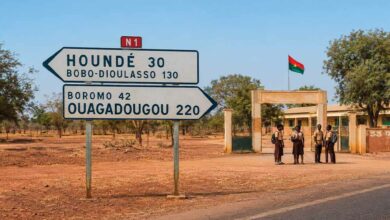
Burkina Faso: court annuls Karma gold purchase contract.
The Ouagadougou Commercial Court annulled, on June 10, 2026, the gold purchase contract dated August 11, 2014, that linked the Karma mine to Franco-Nevada (Barbados) Corporation, a Barbadian subsidiary of the Canadian group Franco-Nevada, and to International Royal Corporation, formerly Sandstorm Gold Bank Ltd. Seized in September 2025 by Riverstone Karma, the court rejected the defendants’ objections regarding its jurisdiction. It ordered them jointly and severally to pay 5.218 billion CFA francs to the Burkinabe company and to bear procedural costs. The judgment remains contested. Franco-Nevada maintains that the agreement falls under Ontario law and considers the Burkinabe decision invalid. The group has announced appeals in Canada and other jurisdictions, which could prolong the litigation well beyond this first decision.
Côte d’Ivoire: new deepwater oil discovery.
In July 2026, the Ivorian government officially announced the discovery of light oil at the Bubale-1X well, drilled on offshore block CI-709, approximately 64 km off the coast. The well reached 6,263 meters in depth under 2,376 meters of water. Preliminary analyses revealed 30 meters of net oil pay distributed across two reservoirs. Murphy Oil, the block operator, holds 90% interest, with national company PETROCI holding the remaining 10%. Bubale-1X is the last of three wells drilled by the American group off the country. The discovery still needs to be evaluated before its commercial potential can be established. An appraisal well is planned for the second half of 2026 to measure the extent of the reservoirs. This result strengthens the attractiveness of the Ivorian sedimentary basin, already stimulated by the major discoveries of Baleine and Calao.
Ghana: government undertakes major mining code reform.
The Ghanaian government has approved a draft reform of the 2006 mining law, submitted to Parliament. The text aims to strengthen control over a sector essential to Africa’s leading gold producer, while combating illegal mining and licenses held for speculative purposes. Reconnaissance and prospecting authorizations would be replaced by a single exploration license, limited to five years. Its extension would depend on the results of a two-year work program. Mining leases would remain capped at twenty years. The reform also provides for the creation of district mining committees, responsible for involving host communities in allocation procedures. Companies would have to negotiate directly with communities on community development agreements. Accra thus intends to strengthen local content, promote local mineral processing, and better distribute the sector’s benefits.
DRC: copper exports reach 823,887 tonnes.
In the first quarter of 2026, the Democratic Republic of Congo exported 823,887 tonnes of copper, a 4.8% increase year-on-year. This result consolidates its position as the world’s second-largest producer, behind Chile. These volumes were achieved despite tensions in the supply of sulfuric acid, essential for mineral processing. Zambia, a major supplier to Congolese operators, limited its exports to preserve its own mining sector. Disruptions in sulfur markets caused by the Middle East conflict also weakened supply chains. However, the Congolese Ministry of Mines does not anticipate any major production disruption in 2026. Long-term contracts, stocks built up by major operators, and recourse to various regional suppliers have so far absorbed the shock. A rise in costs and longer lead times remain possible if tensions persist.
Zimbabwe: lithium takes the rail to Maputo.
Zimbabwe has inaugurated a railway link to transport its lithium concentrate to the port of Maputo, Mozambique. A first convoy of 1,000 tonnes, departing from the Gwanda mine operated by the Chinese group Tsingshan, will travel approximately 1,000 km. Until now, this ore was mainly transported by truck, a more expensive solution facing significant logistical constraints. Rail should streamline exports while helping to revive the state-owned National Railways of Zimbabwe, whose freight volume fell to 2 million tonnes in 2025. Africa’s leading lithium producer, Zimbabwe exported 1.13 million tonnes of spodumene concentrate to China in 2025, or about 15% of Chinese imports. Harare is also pushing operators to process more ore locally and targets 344,000 tonnes of lithium sulfate exported annually by 2030.
Ethiopia: $110 million for the Aysha wind farm.
The African Development Bank has approved financing of up to $110 million, or about 63.4 billion CFA francs, for the Aysha wind farm project. With a capacity of 300 MW and an estimated total cost of $508 million, about 293 billion CFA francs, it will be located in the Somali region in the east of the country. Developed and operated by the Emirati group AMEA Power, Aysha will become Ethiopia’s largest wind farm and the first developed by an independent power producer. The project also includes a 5 km 230 kV power line and the modernization of the Aysha II substation. The plant is expected to generate 1,189 GWh of electricity per year. Ethiopian Electric Power will purchase all of this production under a 25-year contract. The project is expected to strengthen the country’s electricity supply and further open Ethiopia’s energy sector to private investment.
India: $11.5 billion for an integrated aluminum complex.
Adani Enterprises and the Emirati group International Holding Company have signed a memorandum of understanding with the State of Odisha to develop an integrated aluminum complex. The partners will each hold 50% of the joint venture. The announced investment reaches $11.5 billion, or approximately 6,630 billion CFA francs, and would constitute the largest foreign investment ever made in Indian metallurgy.
The project will bring together a refinery capable of producing 4 million tonnes of alumina per year, a 2 million tonne aluminum smelter, a dedicated power plant, and a processing park with an annual capacity of one million tonnes. Odisha, rich in bauxite, already accounts for 54% of India’s aluminum production. The complex could create 35,000 jobs during its construction and 18,500 during its operation. However, it still needs to clear several hurdles, as the signed text remains a memorandum of understanding with no definitive timeline announced.
China: a binding +53% target for wind and solar.
China has set itself a binding renewable electricity production target for the first time. Its new five-year plan provides for increasing wind and solar production by 53% between 2025 and 2030. By that time, the two sectors will need to produce more than 4,000 TWh per year, or 30% of national electricity, with installed capacity exceeding 2,800 GW. All renewable energies will need to reach about 6,000 TWh annually.
Beijing also intends to make this production more reliable. Combined with storage, wind and solar must be able to provide 8% of their installed capacity during peak demand and cover at least 20% of consumption during these periods. More than 300 GW of dispatchable renewable capacity must be added by 2030. The plan also provides for the development of deep-sea wind power, green hydrogen, and pumped-storage hydroelectricity.
Cyprus: green light for the country’s first gas project.
Eni and TotalEnergies have taken the final investment decision to develop Cronos, the first gas field expected to enter production in Cyprus. Discovered in 2022 in offshore block 6, approximately 185 km southwest of the island, the field is scheduled to start production in 2028. Jointly owned by the Italian and French groups, with Eni as operator, Cronos contains more than 3 trillion cubic feet of gas. Its plateau production is estimated at 500 million cubic feet per day, equivalent to 2.8 million tonnes of LNG per year.
The gas will be transported to the Zohr offshore facilities in Egypt, then liquefied at the Damietta plant before being exported, notably to Europe. By leveraging existing infrastructure, the project will accelerate its commissioning and strengthen the energy role of the Eastern Mediterranean.
Australia-India: agreement on uranium exports.
Australia and India have finalized an administrative arrangement authorizing long-term exports of Australian uranium to the Indian market. Signed during a summit in Melbourne, the arrangement concretely implements the civil nuclear cooperation agreement concluded in 2014 and entered into force in 2015. The fuel will be exclusively destined for electricity production and subject to the safeguards of the International Atomic Energy Agency (IAEA). This condition is crucial, as India possesses nuclear weapons without having signed the Nuclear Non-Proliferation Treaty.
New Delhi counts on these supplies to increase its nuclear capacity to 100 GW by 2047, compared to less than 9 GW currently. For Australia, which has the world’s largest known uranium resources, the agreement opens a new market and helps diversify its exports. However, no volume, delivery schedule, or commercial amount has yet been communicated.