Local and community development: the challenge of real impact behind the numbers.
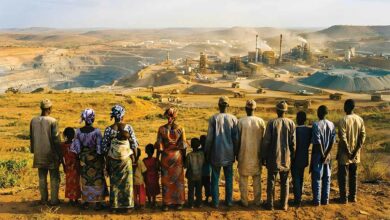
Mining, energy, or industrial exploitation never settles on a neutral territory. Around a site, there are villages, ways of life, old needs, new expectations, sometimes fragilities, often hopes. There are above all communities that see a project arrive with its promises, its announcements, its expected jobs, its compensations, its access roads, its first achievements, and then very quickly a simple and decisive question: what will this project really bring to the host territory? How do community development and local development improve the living conditions of populations living near extractive or energy projects?
This question is taking on increasing importance in public debate and in the life of projects. It now accompanies almost all major extractive or industrial operations. Health, education, water access, training, agriculture, environment, income-generating activities, support for youth and women: community development has progressively established itself as one of the most concrete faces of the relationship between a site and its human environment.
Malian authorities have long insisted on their desire to see extractive industries fully integrate into the national economy. If, like Timothée Parrique, we consider the economy as a means of strengthening the concrete capacities of populations to improve their living conditions and flourish, then extractive and energy industries are called upon to contribute. They can do so directly or within the framework of programs conducted with the State. Hence the need to distinguish local development from community development.
Local development or community development: understanding the nuance.
Chapter 1 of the 2023 Mining Code establishes a fundamental distinction, often unknown to the general public. In everyday language, the expressions “community development” and “local development” are often used as synonyms to refer to the impact of extractive projects on populations.
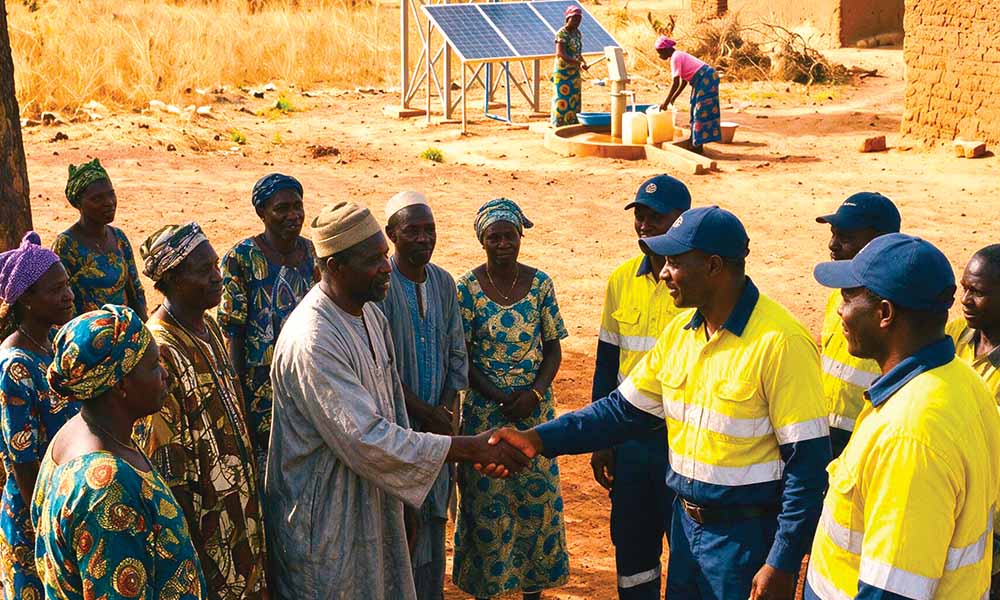
Community development, as defined by Title 11 of the Mining Code, is a direct and targeted obligation of mining companies. It involves financing and implementing concrete projects—water access, health, education, proximity infrastructure—for the benefit of communities directly affected by their operations. The objective is clear: compensate for harm, repair damage, and mitigate the negative effects of exploitation.
In contrast, local development is part of a much broader and territorial vision. It goes beyond mining companies to integrate into national and regional planning, under the auspices of local authorities and the State. Its ambition is to strengthen the economy, public services, and governance at the level of an entire commune or region. Mining projects certainly contribute to this, notably through local content, employment, subcontracting, and taxation, but they are only one lever among others. A communal development plan integrating roads, agriculture, and electrification, financed by various sources, perfectly illustrates this global approach.
Beyond the nuance: what real impact?
For communities, the distinction between terms matters less than concrete results. What matters is the real impact of projects located nearby.
In recent public interventions, representatives of socio-professional organizations in the mining and energy sectors have highlighted a striking gap between the quality of mining facilities and the very concrete harshness of often precarious living conditions in surrounding villages. Inside the mine, modernity is the norm, with a quality of life that has nothing to envy that of major capitals. Meanwhile, local populations suffer the effects of dust generated by exploitation, particularly through extraction operations and vehicle traffic, and continue to live in villages where housing conditions have changed little.
Yet, when the debate arises, mining companies put forward statistics to justify their direct or indirect investments in local development.
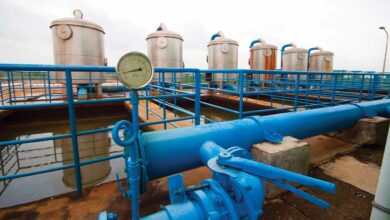
By way of illustration, Fekola announced in 2025 the implementation of the Bafarato agricultural project, covering 60 hectares, benefiting 133 people, including 16 women. The company also indicates having built classrooms capable of accommodating more than 200 students, as well as 58 hydraulic structures.
For the fourth quarter of 2024, Loulu-Gounkoto notably cites the installation of fences around three community schools in Kounda, Faraba, and Néma, as well as the completion and commissioning of the Dabara-Sakola road, 6.5 km long, for a total amount of $442,000 US, or just over 250 million CFA francs. Despite these direct contributions and figures, the gap remains palpable, and a certain hostility toward the mining industry remains very present among part of the Malian population.
Professor Yacouba Coulibaly, geologist and director of the UFR Earth Sciences and Mineral Resources at Félix Houphouët-Boigny University, nevertheless nuances the scope of these achievements. According to him, the achievements of mining companies do not affect all the regions concerned and primarily benefit localities closest to the mines. In 2014, initiatives financed by ENDEAVOUR covered 21 villages, half of the villages in the communes of Sitakily and Kéniéba. Those financed by SOMILO concerned 13 villages, compared to 17 for those financed by SEMOS.
The most visible achievements are primarily the work of mining companies that, within the framework of their corporate social responsibility (CSR) policy, devote part of their resources to high-impact social projects. It is in this context that the question of sharing responsibilities between the State and mining companies in community and local development arises.
Community development: a shared responsibility.
Community development is first and foremost an issue of sovereignty. The reforms undertaken in Mali and, more broadly, in West Africa are presented as a means of breaking with practices denounced by populations. The aim for those in power is to place communities at the heart of mining activity.
In practice, communities are still insufficiently involved upstream in project definition. Their representatives, notably mayors and administration representatives on technical validation committees, do not always relay all the grievances expressed, while decision and validation centers remain largely closed to those primarily concerned.
The first responsibility therefore falls to local representatives, for two reasons. First, they must listen to the real needs of communities and then accurately transcribe them into development plans and projects submitted by mines to the State. Second, they must play a watchdog role during the implementation of these plans. When they are responsible for execution, it must be carried out with the greatest transparency. According to ITIE data, nearly 1.10% of revenues collected by the Treasury are allocated to local authorities, or 10.8 billion CFA francs in 2024. The management of these funds has not always met expectations. Arrests of mayors in certain mining areas, as well as the replacement of some elected officials by provisional administrations, illustrate these difficulties.
The second responsibility is undoubtedly that of the State itself. The Malian government has taken note of this responsibility by integrating several mining funds into the 2023 Mining Code. This commitment was notably materialized by the handing over of the first checks from the Local Development Mining Fund during a ceremony organized by the Presidency of the Republic, bringing together representatives of beneficiary communes. The first collection