Local development funds: a very contrasting distribution.
On March 12, 2026, in Koulouba, the President of the Transition presented giant checks to representatives of beneficiary local authorities of the Local Development Mining Fund. This ceremony symbolized the operational launch of one of the five mining funds established by the 2023 Mining Code. It also allowed the Malian Transition authorities to demonstrate their willingness to redistribute to populations part of the financial windfall from the extractive industry.
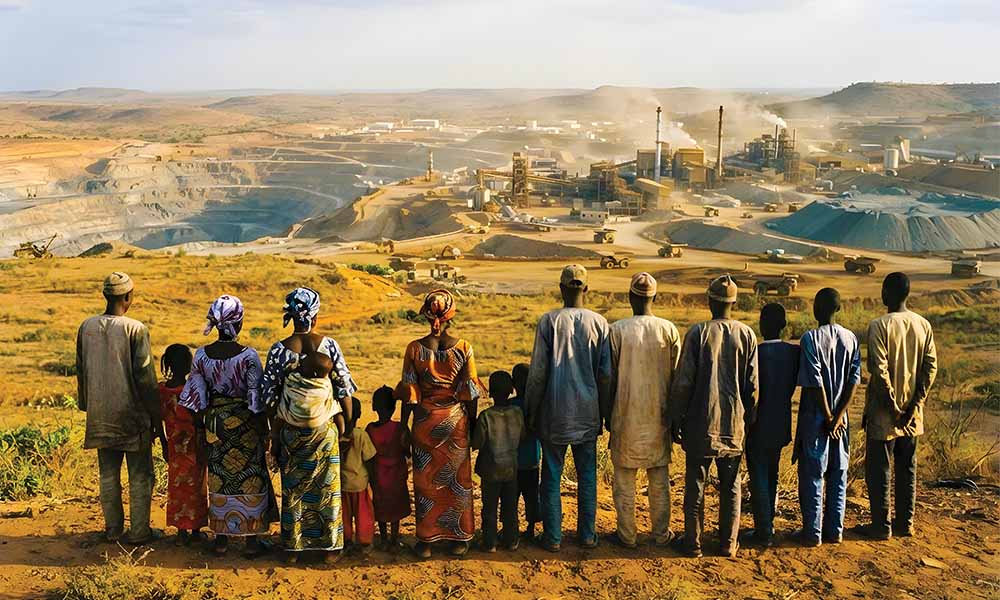
The fund, endowed with 18.4 billion CFA francs for its first year, is intended to finance development projects at the national, regional, and communal levels. It benefits all 819 communes of Mali and is distributed according to the following key: 50% to communes directly affected by mining, 25% to other local authorities in mining areas, and the remaining 25% to local authorities in other regions of Mali.
This distribution key leads to significant disparities between regions, but also between communes directly affected by mining and other communes. The Kayes region receives the highest allocation, with 11,402,236,588 CFA francs, while Kidal comes last, with 42,070,693 CFA francs.
Regarding communes, Kéniéba (3,391,490,923 CFA francs), Dabia (1,789,777,100 CFA francs), and Sitakily (1,649,716,488 CFA francs) unsurprisingly receive the highest allocations. In the Sikasso region, the commune of Fourou, which hosts the Syama mine, receives 1,158,310,087 CFA francs.
At the other end of the spectrum, several communes, particularly in the Mopti, Ségou, Gao, and Kidal regions, each receive 2,103,535 CFA francs, the lowest allocation.
By B.S.